'Abdu'l-Bahá and Jamál Páshá
Lady Blomfield, The Chosen Highway, (1940), George Ronald · Read original
When in Bahá'í history
Haifa (today: Haifa, Israel)
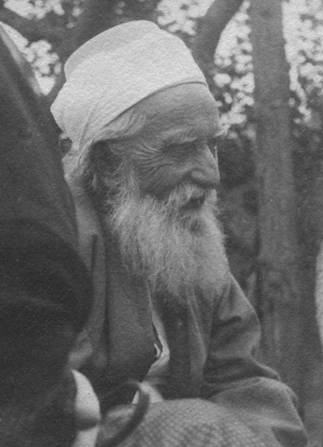
A retelling drawn from The Chosen Highway by Lady Blomfield, which preserves Mírzá Jalál's account of the meeting at Nazareth, together with Shoghi Effendi's God Passes By and H. M. Balyuzi's 'Abdu'l-Bahá: The Centre of the Covenant. The passages in quotation marks are from these books.
Early in 1915 Jamál Páshá, commander of the Ottoman 4th Army Corps, arrived in Syria with orders to overrun the Suez Canal and drive the British out of Egypt. The whole of Syria, the Holy Land included, came under his martial rule. Balyuzi writes that "with him came a reign of terror."
Old opponents of 'Abdu'l-Bahá went to the general with false accusations. When Jamál Páshá first summoned Him, near 'Akká, he received Him courteously but called Him a religious mischief-maker. Jamál Páshá had himself once been known as a political mischief-maker, and 'Abdu'l-Bahá answered, Balyuzi relates, that there were two kinds, political and religious; so far the political mischief-maker had done no damage, and it was to be hoped that the religious one would not either.
At the beginning of 1916 'Abdu'l-Bahá learned that Jamál Páshá was in Nazareth. His son-in-law Mírzá Jalál, who went with Him, recalled that the Master was visibly tired and unwell that day, but "was determined to meet him there." They reached Nazareth that evening. The next day one of the Fahum family, notables of Nazareth, gave a luncheon attended by Jamál Páshá and nearly two hundred of the war leaders. From one o'clock until four 'Abdu'l-Bahá spoke in Turkish "on philosophical and scientific subjects, and on heavenly teachings," and the guests stopped eating to listen.
Mírzá Jalál wrote that Jamál Páshá, "who had been His great enemy because of false accusations, had not paid the proper respect to 'Abdu'l-Bahá when He had first arrived." By the end of the meal he was "most deferential." He held the Master's arm as He rose from the table, led Him to the reception room, and when He left walked with Him out of the house and down to the bottom of the steps.
The goodwill did not last. Balyuzi writes that the accusations had their effect, and that Jamál Páshá declared he would crucify 'Abdu'l-Bahá when he returned victorious from his campaigns. Shoghi Effendi records that the general expressed "his intention of crucifying Him and of razing to the ground the Tomb of Bahá'u'lláh."
In London, anxious for news, Lady Blomfield comforted herself by repeating words of 'Abdu'l-Bahá's: "Have you not realized that never in my life have I been for one day out of danger? ... Be not troubled, these enemies have no power over my life, but that which is given to them from on high."
Meanwhile famine spread. Before the war 'Abdu'l-Bahá had shown the villagers of Nughayb, Samrih and 'Adasíyyih how to grow corn for large harvests, and the grain had been stored in pits, some of them made by the Romans. From these stores, Lady Blomfield writes, He "was able to feed numberless poor of the people of Haifa, 'Akka, and the neighbourhood, in the famine years of 1914-1918."
Jamál Páshá's campaigns failed. When he came back, Balyuzi writes, "he was in full flight, defeated and humiliated, and could not stop to carry out his threat." Shoghi Effendi records that British Intelligence had learned of an intention to "crucify 'Abdu'l-Bahá and His family on Mt. Carmel" if the Turkish army had to abandon Haifa, and that General Allenby gave orders to ensure His safety. When the British entered Haifa and their supplies had not yet arrived, the officer in command came to consult the Master. "I have corn for the British Army," He told him.
Jamál Páshá fled for his life and was later killed while a refugee in the Caucasus.
This is a retelling. For Mírzá Jalál's account, see The Chosen Highway by Lady Blomfield.
Cite this story
Blomfield, L.. (1940). *The Chosen Highway*. George Ronald. https://bahai-library.com/blomfield_chosen_highway
Record yourself reading this story
Recording stays on this device only. Nothing is uploaded.
Related stories
The Knighting of 'Abdu'l-Bahá
On 27 April 1920 'Abdu'l-Bahá was knighted at Haifa for His relief of famine in the Holy Land during the First World War. The Star of the West printed a Persian believer's account of the ceremony.
The General Who Held His Arm
Early in 1916, though tired and unwell, 'Abdu'l-Bahá drove from Haifa to Nazareth to meet Jamál Páshá. On the way He prayed for a gravely ill girl in the village of Majdal, and in Nazareth the general who had been His enemy treated Him with every courtesy.
From Famine Relief to Knighthood
Before the First World War ‘Abdu’l-Bahá had villagers grow and store corn, which fed the poor of Haifa and ‘Akká through the famine years. After the British occupation He was knighted, in April 1920.
Refuge at Abú-Sinán
When war came in 1914, ‘Abdu’l-Bahá moved the Bahá’ís of Haifa to the Druze village of Abú-Sinán, where vegetables He had taught them to grow and corn from ‘Adasíyyih kept many from hunger.