Ustád Ismá'íl, the Builder
'Abdu'l-Bahá, Memorials of the Faithful, (1915), Bahá'í Publishing Trust · Read original
When in Bahá'í history
Haifa (today: Haifa, Israel)
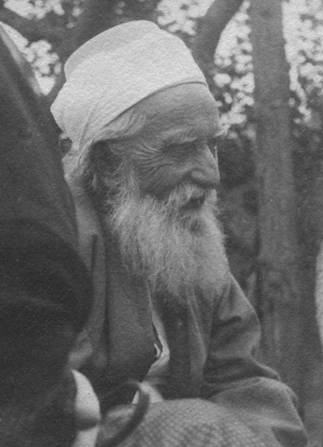
A retelling drawn from 'Abdu'l-Bahá's account of Ustád Ismá'íl in Memorials of the Faithful. Words in quotation marks are quoted from that book.
Ustád Ismá'íl, the builder, was construction overseer to Farrukh Khán (Amínu'd-Dawlih) in Ṭihrán, "living happily and prosperously, a man of high standing, well regarded by all." Then he "lost his heart to the Faith," and "his holy passion consumed every intervening veil." He stopped being cautious and became known throughout Ṭihrán as a pillar of the Bahá'ís.
Farrukh Khán protected him at first. In the end he called him in and warned him that the Sháh had found out about him and might seize him without warning and hang him. The best thing, he said, was to leave the country.
"Composed, happy, Ustád gave up his work, closed his eyes to his possessions, and left for 'Iráq, where he lived in poverty." He had recently married and loved his wife deeply. Her mother came and, by a trick, got his permission to take the young woman back to Ṭihrán, supposedly for a visit. When they reached Kirmánsháh, the mother told the mujtahid that her son-in-law had abandoned his religion and that her daughter could not remain his lawful wife. The mujtahid arranged a divorce and married the girl to another man. When the news reached Baghdád, Ismá'íl only laughed. "God be praised!" he said. "Nothing is left me on this pathway. I have lost everything, including my bride. I have been able to give Him all I possessed."
After Bahá'u'lláh left Baghdád, the people of the city turned on the believers who remained and sent them as captives to Mosul. Ustád Ismá'íl was old and feeble, but he set out on foot "with no provisions for his journey, crossed over mountains and deserts, valleys and hills, and in the end arrived at the Most Great Prison." Bahá'u'lláh had once written out for him an ode of Rúmí and told him to sing it, and he sang it through the long nights of that journey.
He slipped into the fortress of 'Akká, stayed some days, and came into the presence of Bahá'u'lláh. He was then told to find a lodging in Haifa. He went there, but "he found no haven there, no nest or hole, no water, no grain of corn," and at last he made his home in a cave outside the town. He got a little tray and set out on it rings of earthenware, thimbles, pins and other trinkets, and every day from morning till noon he walked about selling them. He earned twenty paras on some days, thirty on others, and forty on his best. Then he went back to the cave and made do with a piece of bread.
He was always giving thanks, always saying: "Praise be to God that I have attained such favor and grace; that I have been separated from friend and stranger alike, and have taken refuge in this cave. Now I am of those who gave their all, to buy the Divine Joseph in the market place. What bounty could be any greater than this!"
He died in that condition. "Many and many a time," 'Abdu'l-Bahá writes, "Bahá'u'lláh was heard to express His satisfaction with Ustád Ismá'íl. Blessings hemmed him round, and the eye of God was on him."
This is a retelling. For the fuller account, see Memorials of the Faithful by 'Abdu'l-Bahá.
Cite this story
'Abdu'l-Bahá. (1915). *Memorials of the Faithful*. Bahá'í Publishing Trust. https://www.bahai.org/library/authoritative-texts/abdul-baha/memorials-faithful/
Record yourself reading this story
Recording stays on this device only. Nothing is uploaded.
Related stories
Ḥájí ʻAlí-ʻAskar and the Consul
When thieves took Ḥájí ʻAlí-ʻAskar's few goods, the Persian Consul wanted him to testify to a far larger loss. Threatened with prison and banishment, he refused to lie. Bahá'u'lláh later said of him, "I am pleased with him."
The Prayer Carpet and the Two Brothers
Two brothers who shared Bahá'u'lláh's exile died in each other's arms in the ‘Akká barracks, and He gave up His prayer carpet to pay for their burial. ‘Abdu'l-Bahá also recalls their brother Pahlaván Riḍá.
The Merchant Who Would Not Lie
When a Persian Consul pressed him to testify that thieves had stolen far more than his few goods, the Tabríz merchant ‘Alí-‘Askar refused to lie; later, in the ‘Akká prison with his stricken family, he never ceased giving thanks.
From Tabríz to the Most Great Prison
Hounded by his own relatives and friends in Ádhirbáyján for his faith, Hájí Áqá of Tabríz fled with his family to Adrianople, shared the exiles’ imprisonment in ‘Akká, and died there near Bahá’u’lláh.