Ḥájí ʻAlí-ʻAskar and the Consul
'Abdu'l-Bahá, Memorials of the Faithful, (1915), Bahá'í Publishing Trust · Read original
When in Bahá'í history
Adrianople (today: Edirne, Turkey)
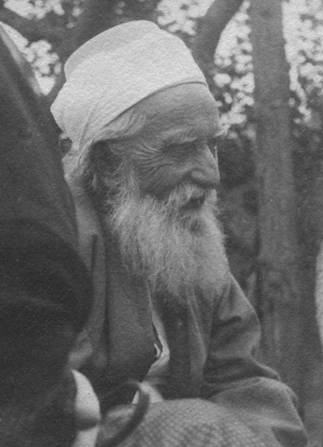
A retelling drawn from 'Abdu'l-Bahá's account of Ḥájí ʻAlí-ʻAskar-i-Tabrízí in Memorials of the Faithful. Words in quotation marks are quoted from that book.
Ḥájí ʻAlí-ʻAskar was a merchant of Tabríz, respected throughout Ádhirbayján and "recognized for godliness and trustworthiness, for piety and strong faith." He was one of the earliest believers. He brought his household, his kindred and his friends into the Faith, and for this he was persecuted until he could endure his homeland no longer. With his family he came to Adrianople, where Bahá'u'lláh was then in exile, and lived there in financial straits, but content, "with dignity, patience, acquiescence, and offering thanks."
To earn a living he took a little merchandise from Adrianople to the town of Jumʻih-Bázár. It was worth very little, and thieves carried it off. The Persian Consul, hearing of the theft, sent the government a document naming an enormous sum as the value of the stolen goods. The thieves were caught, and they turned out to have considerable funds. The Consul called in ʻAlí-ʻAskar and told him: "These thieves are very rich. In my report to the Government, I wrote that the amount of the theft was great. Therefore you must attend the trial and testify conformably to what I wrote."
The Ḥájí replied: "Your Honor, Khán, the stolen goods amounted to very little. How can I report something that is not true? When they question me, I will give the facts exactly as they are. I consider this my duty, and only this."
"Hájí," said the Consul, "We have a golden opportunity here; you and I can both profit by it. Don't let such a once-in-a-lifetime chance slip through your hands."
"Khán, how would I square it with God? Let me be. I shall tell the truth and nothing but the truth."
The Consul was beside himself. He threatened to jail him, to have him banished, to hand him over to the police as an enemy of the state and have him taken in manacles to the Persian frontier. The Ḥájí only smiled. "I have given up my life for the truth," he said. "I have nothing else. You are telling me to lie and bear false witness. Do with me as you please; I will not turn my back on what is right."
Seeing that nothing would make him testify to a falsehood, the Consul told him to leave the town, so that he could inform the government that the owner of the goods had gone away and could not be found. Otherwise, the Consul said, he would be disgraced. ʻAlí-ʻAskar went back to Adrianople and said nothing about his stolen goods, but the story became known and caused considerable surprise.
When the exiles were sent from Adrianople to 'Akká, ʻAlí-ʻAskar and his family went with them, and they were held in the prison for years. 'Abdu'l-Bahá writes that in all that time he was never known to speak except in thankfulness and praise, and that Bahá'u'lláh was heard time and again to speak of him with loving-kindness, saying: "I am pleased with him." He died in the Most Great Prison, "still patient and thankful, still with dignity and firm in his faith."
This is a retelling. For the fuller account, see Memorials of the Faithful by 'Abdu'l-Bahá.
Cite this story
'Abdu'l-Bahá. (1915). *Memorials of the Faithful*. Bahá'í Publishing Trust. https://www.bahai.org/library/authoritative-texts/abdul-baha/memorials-faithful/
Record yourself reading this story
Recording stays on this device only. Nothing is uploaded.
Related stories
Ustád Ismá'íl, the Builder
Ustád Ismá'íl, a prosperous builder in Ṭihrán, lost his work, his possessions and his bride for the Faith. He ended his days peddling trinkets from a cave near Haifa, always giving thanks to God.
The Prayer Carpet and the Two Brothers
Two brothers who shared Bahá'u'lláh's exile died in each other's arms in the ‘Akká barracks, and He gave up His prayer carpet to pay for their burial. ‘Abdu'l-Bahá also recalls their brother Pahlaván Riḍá.
The Merchant Who Would Not Lie
When a Persian Consul pressed him to testify that thieves had stolen far more than his few goods, the Tabríz merchant ‘Alí-‘Askar refused to lie; later, in the ‘Akká prison with his stricken family, he never ceased giving thanks.
From Tabríz to the Most Great Prison
Hounded by his own relatives and friends in Ádhirbáyján for his faith, Hájí Áqá of Tabríz fled with his family to Adrianople, shared the exiles’ imprisonment in ‘Akká, and died there near Bahá’u’lláh.