Ḥájí Ákhúnd, Never Vanquished
'Abdu'l-Bahá, Memorials of the Faithful, (1915), Bahá'í Publishing Trust · Read original
When in Bahá'í history
Ṭihrán (today: Tehran, Iran)
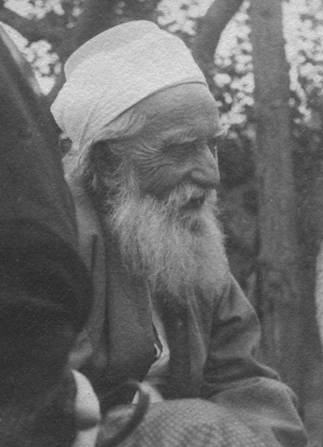
A retelling based on 'Abdu'l-Bahá's memorial of Mullá ʻAlí-Akbar in Memorials of the Faithful. Words in quotation marks are 'Abdu'l-Bahá's own, as given in the published English translation.
Mullá ʻAlí-Akbar of Shahmírzád, known among the Bahá'ís as Ḥájí Ákhúnd, was one of the Hands of the Cause of God. 'Abdu'l-Bahá writes that early in life he "labored diligently, by day and night" in the schools of his time, until he knew their secular studies, philosophy and religious jurisprudence. He sat with philosophers, mystics and Shaykhís, and none of it satisfied him. "His lips stayed parched," the Master writes, because in all those circles "he had found no passion; no joy, no ecstasy; no faintest scent of love."
When he came to the Faith of Bahá'u'lláh, "Like a fountain, his heart welled and jetted forth." He first took in the new light with humility, and only then began to teach others. He brought many to the Faith. "For the sake of God he cast all caution aside, as he hastened along the ways of love." In Ṭihrán he was mocked by high and low; when he walked through the streets and bázárs, people pointed at him and called him a Bahá'í. "Whenever trouble broke out, he was the one to be arrested first."
"Again and again he was bound with chains, jailed, and threatened with the sword." A photograph was taken of him in chains together with Ḥájí Amín, and 'Abdu'l-Bahá says it will serve as an example to whoever has eyes to see: "There they sit, those two distinguished men, hung with chains, shackled, yet composed, acquiescent, undisturbed."
In the end, whenever there was an uproar in the city, Mullá ʻAlí "would put on his turban, wrap himself in his 'abá and sit waiting, for his enemies to rouse and the farráshes to break in and the guards to carry him off to prison." Yet he was kept safe. "His life hung by a thread from one moment to the next; the malevolent lay in wait for him; he was known everywhere as a Bahá'í—and still he was protected from all harm." The Master applies to him an old saying: "The sign of a knower and lover is this, that you will find him dry in the sea."
During the lifetime of Bahá'u'lláh, Mullá ʻAlí travelled to His presence and was received with grace and favor. After Bahá'u'lláh's ascension he remained "loyal to the Testament of the Light of the World, staunch in the Covenant which he served and heralded," and in Írán he gave all his time to the Cause. Of those years 'Abdu'l-Bahá writes: "Openly at odds with his tyrannical oppressors, no matter how often they threatened him, he defied them. He was never vanquished. Whatever he had to say, he said. He was one of the Hands of the Cause of God, steadfast, unshakable, not to be moved."
The Master adds a personal word: "I loved him very much, for he was delightful to converse with, and as a companion second to none." Ḥájí Ákhúnd is buried in Ṭihrán. His spirit, 'Abdu'l-Bahá writes, lives on "in the seat of truth, in the presence of the potent King."
This is a retelling. For the full memorial, see "Mullá ʻAlí-Akbar" in Memorials of the Faithful by 'Abdu'l-Bahá.
Cite this story
'Abdu'l-Bahá. (1915). *Memorials of the Faithful*. Bahá'í Publishing Trust. https://www.bahai.org/library/authoritative-texts/abdul-baha/memorials-faithful/
Record yourself reading this story
Recording stays on this device only. Nothing is uploaded.
Related stories
Áqá ‘Alíy-i-Qazvíní
‘Abdu’l-Bahá remembers Áqá ‘Alí of Qazvín, a host and teacher of the early believers who was beaten for his faith, followed Bahá’u’lláh to the prison of ‘Akká, and remained content through poverty and illness.
From Tabríz to the Most Great Prison
Hounded by his own relatives and friends in Ádhirbáyján for his faith, Hájí Áqá of Tabríz fled with his family to Adrianople, shared the exiles’ imprisonment in ‘Akká, and died there near Bahá’u’lláh.
Two Carpenter Brothers of Káshán
Two carpenter brothers from Káshán, driven out by persecution, joined Bahá’u’lláh in ‘Iráq; by different roads, one through Adrianople and one through captivity in Mosul, both reached the prison of ‘Akká, where they worked at their craft, joyful and faithful to the end.
The Exiles in the Barracks of 'Akká
Bahá'u'lláh and about seventy companions were locked in the barracks of 'Akká, where nearly all fell sick and three died. Over the following years the hostility of the town gave way, step by step, to respect and reverence.