The Hermit and Bahá’u’lláh
bahaistories.com archive · Read original
When in Bahá'í history
'Akká (today: Acre, Israel)
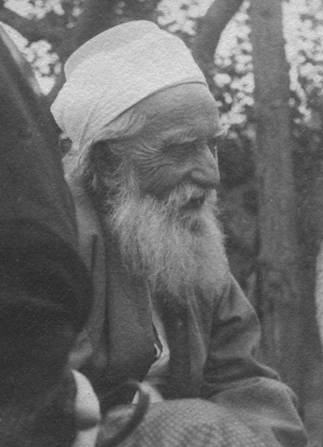
May Bolles (Maxwell) took an early pilgrimage to the prison-city. She heard that the food man eats is of no importance, as its effect endures but a short time. But the food of the spirit is life to the soul and its effects endure eternally. She heard ‘Abdu’l-Bahá tell the touching ‘story of the hermit’. Bahá’u’lláh ‘was travelling from one place to another with His followers’ and “He passed through a lonely country where, at some little distance from the highway, a hermit lived alone in a cave. He was a holy man, and having heard that Our Lord, Bahá’u’lláh, would pass that way, he watched eagerly for His approach. When the Manifestation arrived at that spot the hermit knelt down and kissed the dust before His feet, and said to Him: ‘Oh, my Lord, I am a poor man living alone in a cave nearby; but henceforth I shall account myself the happiest of mortals if Thou wilt but come for a moment to my cave and bless it by Thy Presence.’ Then Bahá’u’lláh told the man that He would come, not for a moment but for three days, and He bade His followers cast their tents, and await His return. The poor man was so overcome with joy and gratitude that he was speechless, and led the way in humble silence to his lowly dwelling in a rock. There the Glorious One sat with him, talking to him and teaching him, and toward evening the man bethought himself that he had nothing to offer his great Guest but some dry meat and some dark bread, and water from a spring nearby. Not knowing what to do he threw himself at the feet of his Lord and confessed his dilemma. Bahá’u’lláh comforted him and by a word bade him fetch the meat and bread and water; then the Lord of the universe partook of this frugal repast with joy and fragrance as though it had been a banquet, and during the three days of His visit they ate only of this food which seemed to the poor hermit the most delicious he had ever eaten. Bahá’u’lláh declared that He had never been more nobly entertained nor received greater hospitality and love. ‘This,’ exclaimed the Master, when He had finished the story, ‘shows us how little man requires when he is nourished by the sweetest of all foods—the love of God.’”
Source: Vignettes from the Life of ‘Abdu’l-Bahá (Annamarie Honnold), pp. 25–26 (from May Maxwell, An Early Pilgrimage).
Collected from bahaistories.com (Subject: hospitality).
Cite this story
Various. *bahaistories.com archive*. https://bahaistories.com/subject/hospitality
Record yourself reading this story
Recording stays on this device only. Nothing is uploaded.
Related stories
A Visit to the Shrine at Bahjí
Julia Grundy describes her party's 1905 visit to the Shrine of Bahá'u'lláh at Bahjí: the shoes removed at the entrance, the silent prayer at the Tomb, and the tea served afterward in a small side room.
The Egyptian Merchant’s Debts
Told he could come on pilgrimage once his debts were paid, an Egyptian merchant spent five years clearing them. Arriving unrecognized in Haifa, he was found by ‘Abdu’l-Bahá, who spent the night praying beside him.
Siyyid Muḥammad-Taqí Manshadí
‘Abdu’l-Bahá recalls Siyyid Muḥammad-Taqí Manshadí, who welcomed pilgrims at his little shop in Haifa, handled the Tablets and the believers' mail, stayed loyal to the Covenant, and carried on that service in Port Sa‘íd until his death.
The Merchant Who Owed No Man
Told he might visit Bahá’u’lláh once he owed no man anything, the Egyptian merchant ‘Abdu’l-Karím spent five years paying his debts, arrived at Haifa penniless, and was found at the dock by ‘Abdu’l-Bahá.