The Feast With Three Parts
J. E. Esslemont, Bahá'u'lláh and the New Era, (1923), George Allen & Unwin · Read original
When in Bahá'í history
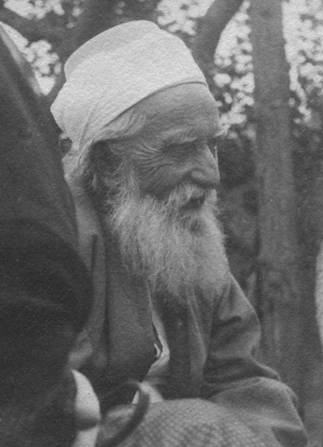
A retelling for children, based on Bahá'u'lláh and the New Era by J. E. Esslemont (1923), with a verse from the Kitáb-i-Aqdas.
The Bahá'í year has nineteen months, and each month has nineteen days. On the first day of every month, the Bahá'ís of each town or village come together for the Nineteen Day Feast.
Bahá'u'lláh Himself asked for this gathering. In the Kitáb-i-Aqdas, His Most Holy Book, He wrote:
Verily, it is enjoined upon you to offer a feast, once in every month, though only water be served; for God hath purposed to bind hearts together, albeit through both earthly and heavenly means.
J. E. Esslemont, in his book Bahá'u'lláh and the New Era, describes three things that happen at the Feast.
First, the friends pray together and listen to readings from the Holy Books.
Next, they talk over the affairs of their community. The Spiritual Assembly, the group the Bahá'ís elect to look after the community, tells everyone what it has been doing. Then it asks the friends what they think of its plans, and whether they have ideas for new and better ways to serve.
Last, the friends spend time in one another's company, even if only water is served.
This is a retelling for children. For the fuller account, see "The Three Portions of the Nineteen Day Feast".
Cite this story
Esslemont, J. E.. (1923). *Bahá'u'lláh and the New Era*. George Allen & Unwin. https://www.gutenberg.org/cache/epub/19241/pg19241-images.html
Record yourself reading this story
Recording stays on this device only. Nothing is uploaded.
Related stories
Spiritual Assemblies
Before ‘Abdu’l-Bahá completed His earthly mission, He had laid a basis for the development of the administrative order established in Bahá’u’lláh’s Writings.
The Administrative Order
It has been the general characteristic of religion that organization marks the interruption of the true spiritual influence and serves to prevent the original impulse from being carried into the world.
Meetings
‘Abdu’l-Bahá attaches the greatest importance to regular meetings of the believers for united worship, for the exposition and study of the teachings and for consultation regarding the progress of the Movement.
The Nineteen Day Feast
With the development of the Bahá’í administrative order since the ascension of ‘Abdu’l-Bahá, the Nineteen Day Feast, observed on the first day of each Bahá’í month, has assumed a very special importance …