Nettie's Stone
Shoghi Effendi, God Passes By, (1944), Bahá'í Publishing Trust · Read original
When in Bahá'í history
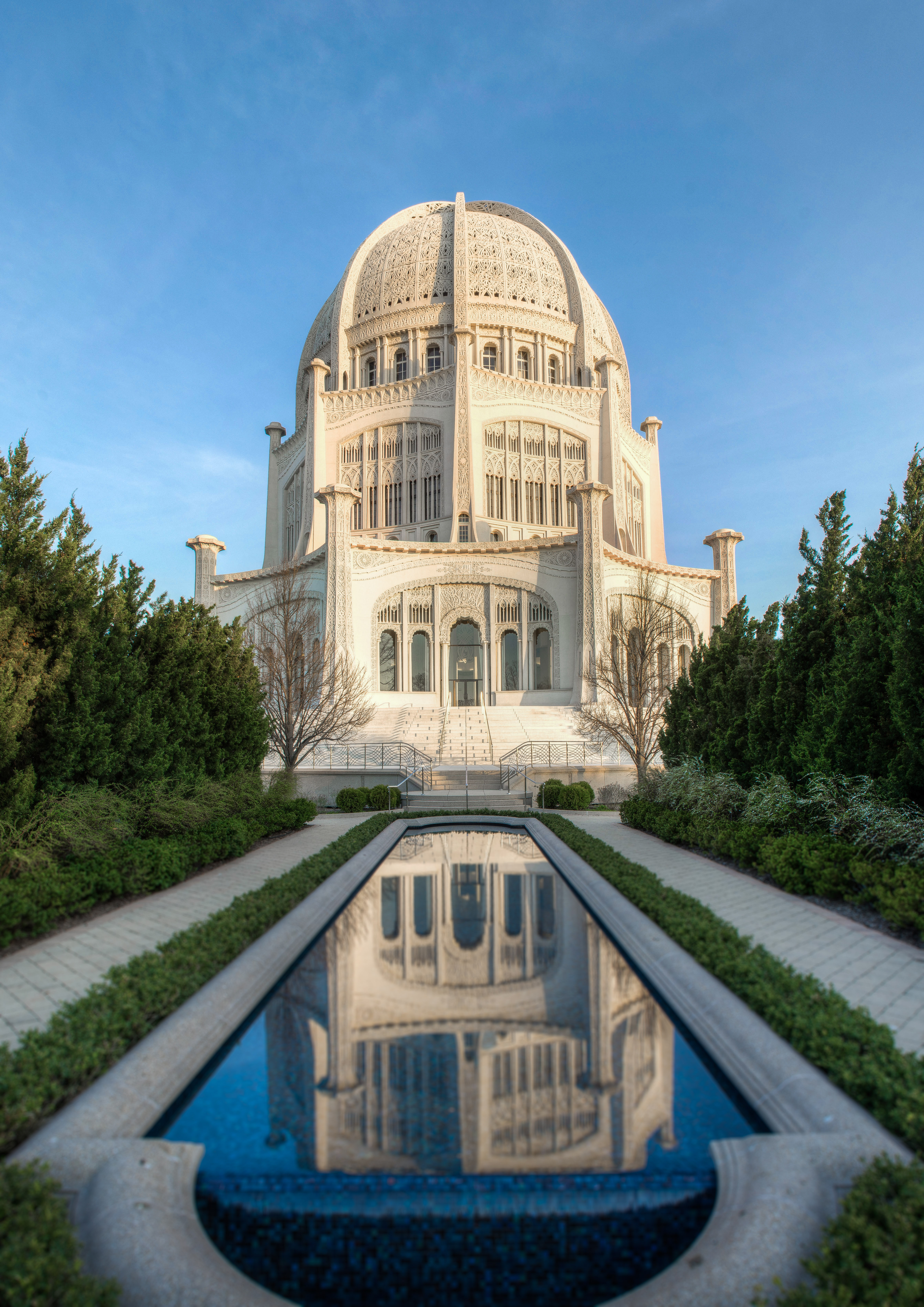
A retelling for children. God Passes By by Shoghi Effendi records that 'Abdu'l-Bahá laid the dedication stone at Wilmette on 1 May 1912; the details of the day follow Mahmúd's Diary, and Nettie Tobin's part follows her own account in Annamarie Honnold's Vignettes from the Life of 'Abdu'l-Bahá.
The Bahá'ís of America wanted to build a House of Worship, a temple where people of every religion could come to pray. It would be the first Bahá'í House of Worship in the Western world. For years they collected money, and they bought land on the shore of Lake Michigan, a little north of Chicago, in a place called Wilmette. Bahá'ís in Persia, India, Egypt and many other countries sent gifts to help.
In 1912 'Abdu'l-Bahá came to America. On 1 May He was to lay the first stone on the Temple land with His own hands.
In Chicago there lived a Bahá'í named Nettie Tobin. She did not have much money, but she wanted to give something. She thought the Master should have a good stone to mark the place where the Temple would stand.
Near her home a building was going up. Nettie saw a pile of stones by a wall and asked the builder if she could have one. "Sure, help yourself," he said, "these are rejected." They were stones the builders did not want.
Nettie put a stone into an old baby carriage and wheeled it home. Early the next morning, with a Persian friend, she pushed the carriage to the streetcar and got it on board, even though the conductor objected. They changed streetcars twice. Near the Temple land the carriage hit a broken pavement and fell apart. Just then two boys came by with a wagon, and they lent it to carry the stone the rest of the way.
At the Temple land the friends had put up a large tent. 'Abdu'l-Bahá drove around the edges of the land, and then He went into the tent and spoke to everyone about how the Cause of Bahá'u'lláh brings together the peoples of the East and the West.
Then He went to the place where the stone was to be laid. He was given a golden trowel made for the day, and He dug the earth. After Him, Bahá'ís from America and from the lands of the East, men and women, took turns digging.
When the hole was ready, 'Abdu'l-Bahá set the stone in its place with His own hands. It was Nettie Tobin's stone, the one the builder had rejected.
Later Nettie wrote: "Imagine my joy when 'the stone refused by the builder' was received and used by the Master!"
Building the Temple took a long time. It was finally dedicated in 1953, more than forty years after that day in 1912.
This is a retelling for children. For the fuller account, see "The Laying of the Wilmette Temple Cornerstone".
Cite this story
Effendi, S.. (1944). *God Passes By*. Bahá'í Publishing Trust. https://www.bahai.org/library/authoritative-texts/shoghi-effendi/god-passes-by/
Record yourself reading this story
Recording stays on this device only. Nothing is uploaded.
Related stories
The Laying of the Wilmette Temple Cornerstone
On 1 May 1912 'Abdu'l-Bahá dedicated the site of the first Bahá'í House of Worship in the West at Wilmette, laying as its first stone a discarded block brought by Nettie Tobin.
The Stone Refused by the Builder
Nettie Tobin, who was not well off, brought a builder's rejected stone to the Wilmette Temple site by baby carriage, streetcar and a borrowed wagon, and the Master used it at the dedication of the land.
Nettie Tobin's Stone
Unable to give money for the Temple, the Chicago seamstress Nettie Tobin hauled a discarded building stone to the Temple site in 1908; on May 1, 1912, ‘Abdu’l-Bahá used it when He dedicated the ground.
The Stone the Builder Rejected
In 1912 Nettie Tobin, a Chicago Bahá'í with little money, hauled a stone a builder had rejected all the way to the House of Worship site, where 'Abdu'l-Bahá used it at the dedication.