The Last Wish of the Purest Branch
Bahá'í Chronicles editors, Bahá'í Chronicles · Read original
When in Bahá'í history
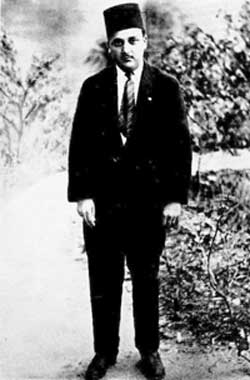
A retelling for children of the account of Mírzá Mihdí in Bahá'í Chronicles, which reproduces the Bahá'í Encyclopedia Project article by Shahriar Razavi.
Mírzá Mihdí was the youngest of the three surviving children of Bahá'u'lláh and Ásíyih Khánum. His older brother was 'Abdu'l-Bahá and his sister was Bahíyyih Khánum. He was born in Ṭihrán in 1848. Bahá'u'lláh later gave him the title "the Purest Branch."
When Mihdí was four, Bahá'u'lláh was thrown into the Síyáh-Chál prison, and afterwards He was banished from Persia. The family set out for Baghdád in the middle of winter. Mihdí was unwell and could not make the hard three-month journey, so he was left behind with relatives. He did not see his parents again until 1860, when he was twelve and joined them in Baghdád. After that he went with Bahá'u'lláh into each of His exiles: to Constantinople, to Adrianople, and at last to the prison-city of 'Akká.
In 'Akká the exiles were held in the barracks. There was little food, little clean water to drink and much sickness. For the first time, believers who had travelled all the way from Persia could not reach Bahá'u'lláh. Some had to go home without seeing Him. Some stood beyond the moat and looked across at the barracks, hoping for a glimpse of His face at the window.
Though he was young, Mihdí was known among the exiles as "a pillar of strength." He was like 'Abdu'l-Bahá in looks and in character, and he was gentle, courteous and patient. He served as one of Bahá'u'lláh's secretaries, writing down the Tablets that Bahá'u'lláh revealed. Many of the pages he copied in his fine handwriting still exist.
One summer evening in 1870, Mihdí was walking on the prison roof and praying, as he often did. He was so deep in prayer that he did not notice an open skylight. He fell through it onto a wooden crate on the floor below and was badly hurt. A doctor was called, but he could not save him.
As he lay dying, Mihdí made one last request of Bahá'u'lláh: that his death might be accepted as a sacrifice, so that the rules of the prison would be eased and the believers who longed to visit Bahá'u'lláh could come into His presence. He died the next day, 23 June 1870.
'Abdu'l-Bahá kept watch outside a tent in the prison courtyard while His brother's body was prepared for burial. Around the time of the burial an earthquake shook the region. In a Tablet addressed to His son, Bahá'u'lláh wrote: "When thou wast laid to rest in the earth, the earth itself trembled in its longing to meet thee."
Four months after Mihdí died, the exiles were moved out of the barracks into houses in the town, where they could receive visitors. His dying wish had been granted.
In December 1939 Shoghi Effendi moved the remains of Mírzá Mihdí and of his mother to Mount Carmel in Haifa. They were buried on the same day, near the resting-place of his sister Bahíyyih Khánum. Shoghi Effendi helped carry the coffins, laid each one in its place, and scattered flowers on them.
This is a retelling for children. For the fuller account, see "Mírzá Mihdí".
Cite this story
editors, B. C.. *Bahá'í Chronicles*. https://bahaichronicles.org/mirza-mihdi/
Record yourself reading this story
Recording stays on this device only. Nothing is uploaded.
Related stories
The Sacrifice of the Purest Branch
Bahá’u’lláh’s son Mírzá Mihdí, the Purest Branch, fell through a skylight in the ‘Akká barracks in 1870 and offered his life so that the believers might attain his Father’s presence; in 1939 Shoghi Effendi reburied him on Mount Carmel.
Dearly-Beloved Greatest Holy Leaf
Brethren and fellow-mourners in the Faith of Bahá’u’lláh! A sorrow, reminiscent in its poignancy, of the devastating grief caused by ‘Abdu’l-Bahá’s sudden removal from our midst, has stirred the Bahá’í world to its foundations.
The Life of ‘Abdu’l-Bahá
A biography of ‘Abdu’l-Bahá, from His childhood in Tehran and long years of exile and imprisonment to His ministry as Center of the Covenant, His journeys to the West, His writings and His passing in Haifa in 1921.
The Hill of God Is Stirred
O loved ones of God, These two precious and most exalted treasures, these two keepsakes of the sacred Beauty of Abhá, have now been joined to the third trust from Him, that is, to the daughter of Bahá and His remnant, the token of the Master’s Remembrance.