Keep the Money
Juliet Thompson, The Diary of Juliet Thompson
When in Bahá'í history
How this story reached us
- 1.The Diary of Juliet Thompson, entry for 9 July 1909, luncheon (narr/wrapped/thompson_diary.txt lines 1248-1290)
- 2.The Diary of Juliet Thompson, the Tablet to Mrs Gibbons about the portrait (narr/wrapped/thompson_diary.txt lines 3816-3821)
- 3.The Diary of Juliet Thompson, 13 June and 5 July 1912, the sittings and the finished portrait (narr/wrapped/thompson_diary.txt lines 4217-4222, 4248-4251)
- 4.The Diary of Juliet Thompson, 20 November 1912, the Master in Juliet's house (narr/wrapped/thompson_diary.txt lines 5097-5104)
- 5.The Diary of Juliet Thompson, 4-5 December 1912, the day before the Master sailed and the morning of His sailing (narr/wrapped/thompson_diary.txt lines 5261-5290)
A retelling based on The Diary of Juliet Thompson by Juliet Thompson. Words in quotation marks are from that diary.
On 9 July 1909 Juliet Thompson was a pilgrim in 'Akká, at luncheon at 'Abdu'l-Bahá's table. He had been speaking about music, comparing it to a clear and polished chalice and the Teachings of God to the water in it. Then He turned to the window and pointed to a ship on the sea. "See: a ship!" He said to Alice, Juliet's travelling companion, who was sitting beside Him.
"If we build the Temple quickly," Alice asked, "and send a ship for You, will You come to America?"
"I will come of My own volition to America if they build the Mashriqu'l-Adhkár quickly. But," He said, and Juliet noted that He said it sadly and very gently, "they will not build it quickly."
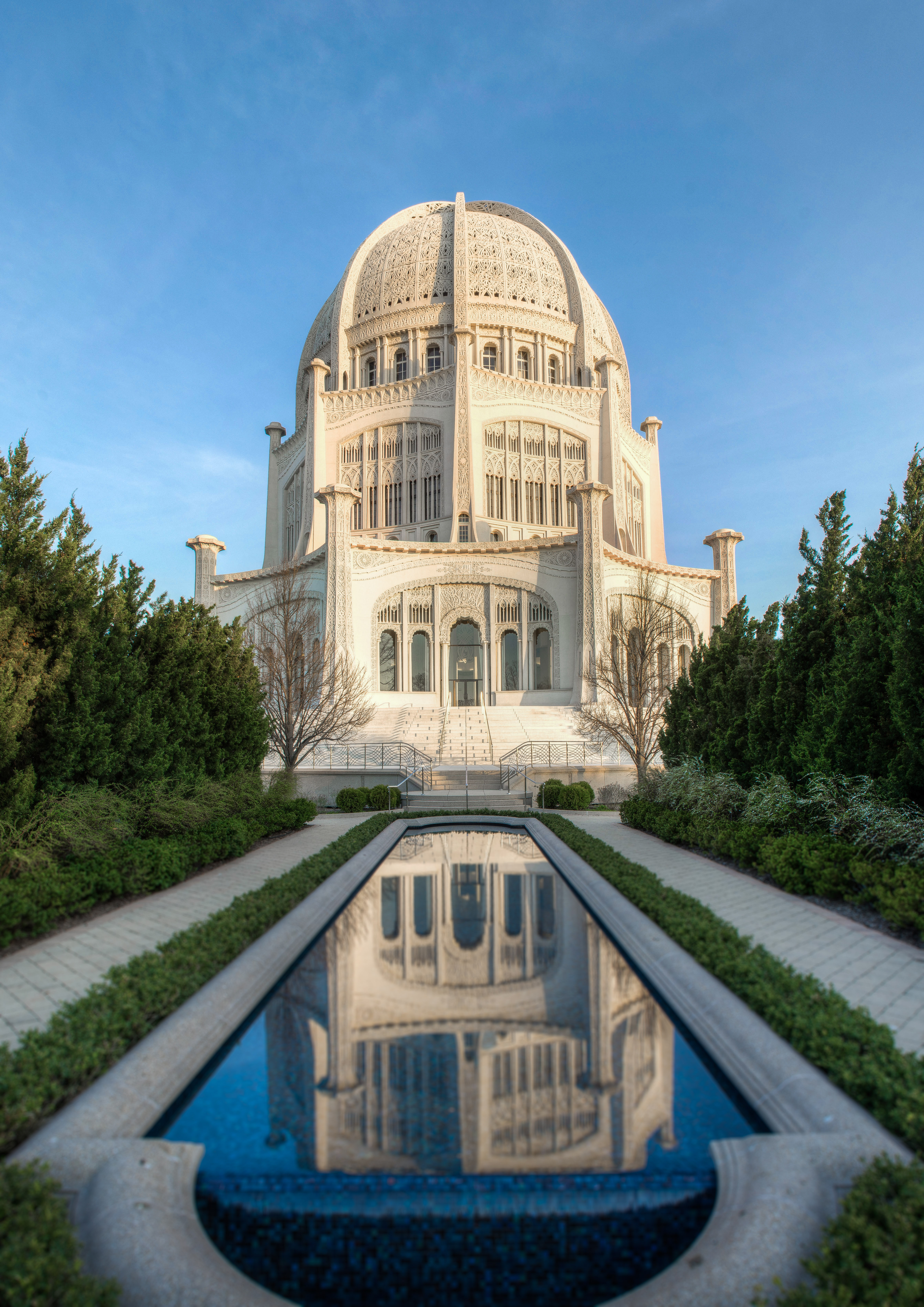
The Mashriqu'l-Adhkár was the House of Worship the American believers hoped to raise. In 1912 'Abdu'l-Bahá did come to America. The night before He landed in New York, Mrs Gibbons, who had asked that her own daughter might paint Him, received a Tablet in which He said: "On My arrival in America Miss Juliet Thompson shall paint a wonderful portrait of Me."
Juliet, who was a painter, painted His portrait in New York that summer. The sittings, she wrote, were "so wonderful, yet so humanly difficult." They moved from room to room, from one kind of light to another, and people came in and watched her work. He sat for her six times, but she said she really did the portrait in the three half hours He had promised her. At the sixth sitting, in His own room on the top floor, she was looking at the portrait wondering what she could find to do when He rose from His chair and said, "It is finished." Her diary entry for 5 July 1912 begins, "The Beloved Master's portrait is finished." Photographs were made of the portrait, and she offered them for the Mashriqu'l-Adhkár.
On 20 November 'Abdu'l-Bahá spent the morning in Juliet's house, in her own little room. Her mother brought Him soup she had made especially for Him. "I was just wishing for soup," He said. "You, Mrs Thompson, have the reality of love." He left them for some time, and when He came back He said, "I have been in every room in your house." As He went down the stairs to leave, He said, "This house is blessed."
At last came the day before He was to sail from New York. Juliet asked Him, "May I stay in some corner of this house all day, that I may breathe the same air with You this last day?"
"What does your mother say about it?" He asked, laughing.
"She said I might."
"Very well."
In the afternoon He called her in. He kept her in the room a long time while He saw many others. When He had dismissed them all, He came close to her and took her hand.
"There is a matter," He said, "about which I want to speak to you. The photographs of the portrait you painted of Me, you have offered them for the Mashriqu'l-Adhkár. I know your circumstances, Juliet. You have not complained to Me, you have said nothing, but I know them. I know your affairs are in confusion, that you have debts, that you have that house, that you have to take care of your mother. Now I want you to keep the money," He said, meaning the money from the photographs, "for yourself."
She began to cry.
"No, no; do not feel unhappy," He said, "this is best. You must do exactly as I say. I will speak about this Myself to the believers." He laughed, and said He would tell them it was His command.
"I thanked Him brokenly," she wrote.
The Master paced up and down the room in front of a line of Persian believers who stood with bowed heads and folded arms. Juliet had told her troubles to one of them, Valíyu'lláh, and now he spoke for her: "Juliet wants to know if You are pleased with her, or not?"
"I am very much pleased with the love of Juliet," the Master answered.
"My Lord, I pray that my life may please You," she said.
"Inshá'lláh."
"And that my services may become acceptable to You. I know I have not begun to serve You yet."
The Master said nothing.
That night, she wrote, He healed her broken heart by the tone of His voice as He spoke to her mother. When Mrs Thompson came to bid Him goodbye, He said, "Ah, the mother of Juliet; the mother of Julie!" Julie was her mother's pet name for her.
"I can't bear to say goodbye," said her mother.
"Inshá'lláh, I shall meet you in 'Akká, Mrs Thompson, and there I shall greet you with 'Welcome! Welcome!'"
He had asked Juliet to come to Him on the morning of 5 December, the day of His sailing, and she was there at eight o'clock. He called her in twice. The second time He took her hand. "Remember," He said, "I am with you always. Bahá'u'lláh will be with you always." He had invited her mother too, but she had not felt well enough to come. "Rest assured," He said when Juliet told Him, "that she will be healed." And He filled Juliet's arms with fruit for her. That day He sailed.
This is a retelling. For the fuller account, see The Diary of Juliet Thompson by Juliet Thompson.
Record yourself reading this story
Recording stays on this device only. Nothing is uploaded.
Related stories
Quarters for the Bowery Mission
Before speaking at New York’s Bowery Mission in April 1912, ‘Abdu’l-Bahá had two thousand-franc notes changed into quarters, and He pressed a gift of silver into the hand of each man there.
The Children Selling Violets
On a drive near Thonon in 1911, peasant children selling violets crowded around 'Abdu'l-Bahá. He bought all their flowers and gave to each child bountifully, and when they held out their hands for more, He gently said, "Tell them that they have taken."
Quarters at the Bowery Mission
In April 1912 ‘Abdu’l-Bahá spoke to several hundred men at the Bowery Mission and placed coins in each hand. The quarters left over He gave to a chambermaid, who later came to thank Him and to ask Him to pray for her.
The Fourth Sitting
In New York on 19 June 1912, while Juliet Thompson was painting His portrait, 'Abdu'l-Bahá opened His eyes and named Lua Getsinger the Herald of the Covenant, telling her to go forth and proclaim it.