The Third Step
'Abdu'l-Bahá, 'Abdu'l-Bahá in London
When in Bahá'í history
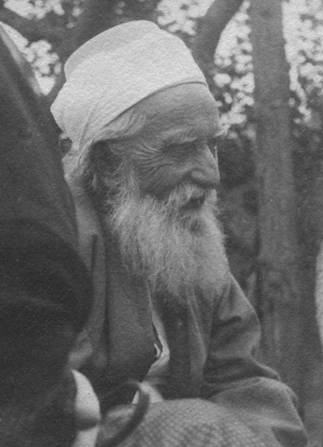
How this story reached us
- 1.'Abdu'l-Bahá in London (gut/19250.txt lines 978-1030: "Notes of Conversations", The Arrival in London and London; knowledge, resolve, action)
- 2.'Abdu'l-Bahá in London (gut/19250.txt lines 736-760: Higher Thought record, visited by nearly every earnest truth-seeker)
- 3.'Abdu'l-Bahá in London (gut/19250.txt lines 2546-2590: "Knowledge Must Result in Action"; the learned man)
- 4.'Abdu'l-Bahá in London (gut/19250.txt lines 2632-2641: "Some Personal Characteristics"; "I go out alone")
- 5.'Abdu'l-Bahá in London (gut/19250.txt lines 2523-2541: "True Spirituality"; must result in deeds)
- 6.'Abdu'l-Bahá in London (gut/19250.txt lines 2606-2607: "Visit to the Lord Mayor"; the East-end hospital visit)
- 7.H. M. Balyuzi, 'Abdu'l-Bahá: The Centre of the Covenant, first visit to London, 1911 (lib/abdul-baha-centre-of-covenant-balyuzi.txt lines 3798 and 4360: Lady Blomfield's flat at 97 Cadogan Gardens; the daily assemblage of visitors)
A retelling based on 'Abdu'l-Bahá in London. Words in quotation marks are as that record gives them.
'Abdu'l-Bahá reached London on the evening of Monday, September 4, 1911. He said He had been tired when He went on board the steamer, but that when He reached London and saw the faces of the friends, His fatigue left Him. Lady Blomfield had put her flat at 97 Cadogan Gardens at His disposal, and visitors gathered there daily to hear Him speak. In the weeks that followed, one record says, He was visited privately by nearly every earnest truth-seeker and leader of high thought in London.
In one talk in London He said: "We cannot bring love and unity to pass merely by talking of it. Knowledge is not enough. Wealth, science, education are good, we know: but we must also work and study to bring to maturity the fruit of knowledge." He went on: "Knowledge is the first step; resolve, the second step; action, its fulfillment, is the third step." To put up a building, He said, one must first make a plan, then have the means, and only then can one build. "A society of Unity is formed, that is good--but meetings and discussions are not enough. In Egypt these meetings take place but there is only talk and no result." The meetings in London were good, and the knowledge and the intention were good, "but how can there be a result without action?"
One morning, speaking to a group of seekers about true spirituality, He said: "That which is truly spiritual must light the path to God, and must result in deeds. We cannot believe the call to be spiritual when there is no result."
One day a representative of a well known society spoke to Him of its meetings, which were held to search into the reality of truth.
"I know of your work," 'Abdu'l-Bahá said. "I think a great deal of it." He knew, He said, that their desire was to serve mankind and to draw humanity together under the banner of oneness, but they must beware lest it become only a discussion. "Look about you. How many committees have been formed, and living for a little while, have died! Committees and Societies can not create or give life."
"People get together and talk, but it is God's Word alone that is powerful in its results," He said. "Look at the followers of Christ. Their power was due to their ardour and their deeds."
"Every effort must have its result, else it is not a true effort," He told him. "You must become the means of lighting the world of humanity. This is the infallible proof and sign. Every progress depends on two things, knowledge and practice. First acquire knowledge, and, when conviction is reached, put it into practice." Then He told a story from His own experience.
"Once a learned man journeyed to see me to receive my blessing, saying he knew and comprehended the Bahá'í teachings."
'Abdu'l-Bahá told him that he could receive the blessings of the Holy Spirit at any time, if he put himself in a receptive attitude to accept them. The man said he was always in a receptive attitude.
"'What would you do,' I asked 'if I were to suddenly turn and strike you?' He instantly flared with indignation and strode angrily about the room."
"After a little," 'Abdu'l-Bahá went on, "I went over and took his arm, saying, 'But you must return good for evil. Whether I honoured you or despised you, you should follow the teachings; now you merely read them.'"
He reminded him of the words of Jesus, that the first shall be last and the last first.
"The man turned, shook my hand and departed, and I have since heard of many kind acts he has done."
When someone addressed Him as a prophet, He answered, "My name is 'Abdu'l-Bahá, the Servant of God."
Before He left London He also went to a hospital in the East End to visit a young writer who was lying seriously ill and was very anxious to see Him. The same record tells how 'Abdu'l-Bahá had left orders that no one was to be turned away. One man who had twice tried in vain to see Him had, through some oversight, been kept from Him, and wrote a heartbreaking letter showing that he thought himself rebuffed. When the letter was translated for Him, 'Abdu'l-Bahá at once put on His coat and turned towards the door. With an expression of unspeakable sadness, the record says, He said: "A friend of mine has been martyred, and I am very grieved. I go out alone." And He swept down the steps.
This is a retelling. For the fuller account, see 'Abdu'l-Bahá in London; the detail of Lady Blomfield's flat is from H. M. Balyuzi, 'Abdu'l-Bahá: The Centre of the Covenant.
This story shares quotes with 1 other story
“A friend of mine has been martyred, and I am very grieved. I go out alone.”
Also in
- The Visitor Who Felt Rebuffed— Various, bahaistories.com archive
Record yourself reading this story
Recording stays on this device only. Nothing is uploaded.
Related stories
Mírzá Abu'l-Faḍl, Scholar and Servant
Mírzá Abu'l-Faḍl, head of a religious college in Ṭihrán, became a Bahá'í in 1876 and spent the rest of his life teaching the Faith, from Egypt to Paris to Green Acre, yet he wept when believers praised him.
The Master Arrives in Denver
After a sleepless night on the train, ‘Abdu’l-Bahá reached Denver on 23 September 1912. Within hours He was meeting reporters, and that evening He spoke to a crowded gathering at the home of Mrs. Roberts.
From Famine Relief to Knighthood
Before the First World War ‘Abdu’l-Bahá had villagers grow and store corn, which fed the poor of Haifa and ‘Akká through the famine years. After the British occupation He was knighted, in April 1920.
Refuge at Abú-Sinán
When war came in 1914, ‘Abdu’l-Bahá moved the Bahá’ís of Haifa to the Druze village of Abú-Sinán, where vegetables He had taught them to grow and corn from ‘Adasíyyih kept many from hunger.