The Mud on the Traveller's Feet
Mírzá Maḥmúd-i-Zarqání, Mahmúd's Diary: The Diary of Mírzá Maḥmúd-i-Zarqání, (1998)
When in Bahá'í history
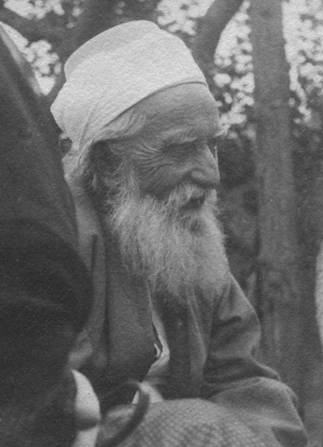
How this story reached us
- 1.Mahmúd's Diary, entry for Monday 30 September 1912, pp. 297-298 (narr/mahmud.txt, re-wrapped copy narr/wrapped/mahmud.txt lines 5417-5445; editor's notes 298-300 at lines 9426-9427)
- 2.The Dawn-Breakers, ch. XXI, pp. 431-433: the Báb names Mullá Ádí-Guzal Sayyáh and sends him to Tabarsí; Áqáy-i-Kalím's account of Sayyáh's arrival at Bahá'u'lláh's home in Tihrán and Vahíd kissing his feet; Sayyáh's own recollection (lib/dawn-breakers.txt, single-line file, near "bestowed upon him the name Sayyah"); note 4 on his full name
- 3.Vahíd as "one of the best known of doctors and Siyyids," sent by Muhammad Sháh to Shíráz: A Traveler's Narrative (gut/19300.txt lines 222-227)
A retelling based on Mahmúd's Diary by Mírzá Mahmúd-i-Zarqání, with details from The Dawn-Breakers by Nabíl-i-A'zam. Words in quotation marks are quoted from those accounts.
On Monday, 30 September 1912, 'Abdu'l-Bahá left the Keynon Hotel in Salt Lake City to continue His journey to California. His secretary, Mírzá Mahmúd-i-Zarqání, recorded in his diary that the Master spoke on various subjects that day. "The Cause of God is penetrating," He said. "It will encompass the whole world. Now as I observe the wilderness of America, I see it full of Bahá'ís." He recalled that when the friends had asserted in the East that peace among the nations was a necessity, people had laughed at them; now there were congresses of peace.
He spoke also of the law of God, which He called "the panacea for all ills because it is in accordance with the needs of the realities of creation." The most distinguished legislators, He said, had concluded that laws must be derived from the necessary relations inherent in the reality of things. "But the divine Manifestation asserted that to institute such laws is beyond human capacity, for human intelligence cannot encompass the realities of things, nor can it comprehend the essential relationships of such realities. Therefore, divine law is necessary, as it embraces the realities and penetrates all things."
Mahmúd wrote that the Master was in the best of health and happiness, and that in spite of all the hardships of the long journey He was "as charmingly fresh as a flower." With unmitigated joy, he added, the Master mentioned the Blessed Beauty, Bahá'u'lláh.
In the afternoon He spoke about spiritual education and intellectual training, and began with Peter. "Peter was devoid of all schooling and so untrained that he could not remember the days of the week." Peter, He said, would tie up seven loaves of bread and open one each day; when he opened the seventh, he knew it was the seventh day and that he had to go to the synagogue. "However, under Christ his spiritual education was such that he became the cause of the enlightenment of the world. Indeed, what holy beings are raised up under the shadow of the Word of God!"
Then He told of something He had seen as a child:
"I remember once in Tihrán when I was a child, I was sitting by Áqá Siyyid Yahyá Vahíd when Mírzá 'Alíy-i-Sayyáh came in wearing the táj and carrying the rod of a dervish and with his bare feet covered with mud."
The notes to the diary explain that this took place in the home of Bahá'u'lláh, when 'Abdu'l-Bahá was five years old. Siyyid Yahyáy-i-Dárábí, called Vahíd, was a devoted follower of the Báb. Mírzá 'Alíy-i-Sayyáh had been a servant of the Báb at Máh-Kú.
Someone asked Sayyáh where he had come from. He replied that he had come from the fortress of Máh-Kú, from the august presence of the Báb. Vahíd rose at once, threw himself at Sayyáh's feet, and with tears streaming down his face rubbed his beard on those feet, saying, "He has come from the court of the Beloved."
'Abdu'l-Bahá ended the story with one sentence: "Although Vahíd was a renowned and illustrious person, still he was humble before the servants of the Threshold of God."
Nabíl's narrative, The Dawn-Breakers, tells of Sayyáh's arrival at that house in more detail. In the autumn of 1849 the Báb, a prisoner in the castle of Chihríq, gave the name Sayyáh to Mullá Ádí-Guzal of Marághih, who had been serving as His attendant, entrusted him with the visiting Tablets He had revealed for the martyrs of the fort of Tabarsí, and sent him to visit their resting-place on His behalf. "Arise," the Báb told him, "and with complete detachment proceed, in the guise of a traveller, to Mazindaran." Sayyáh made his pilgrimage and then went on to Tihrán.
Nabíl heard of his arrival there from Bahá'u'lláh's brother, Áqáy-i-Kalím, who received Sayyáh at the entrance of Bahá'u'lláh's home. "It was the depth of winter," Áqáy-i-Kalím remembered. "Despite the cold and snow of a rigorous winter, he appeared attired in the garb of a dervish, poorly clad, barefooted, and dishevelled." Vahíd, who was then a guest in the house, rushed forward as soon as he heard where Sayyáh had come from and flung himself at the pilgrim's feet. "Holding his legs, which had been covered with mud to the knees, in his arms, he kissed them devoutly."
Years later, Nabíl heard Sayyáh himself recount his experiences. "As to Vahid," Sayyáh said, "notwithstanding the eminence of his position, he invariably gave me preference over himself whenever in the presence of his Host. On the day of my arrival from Mazindaran, he went so far as to kiss my feet."
How renowned Vahíd was can be seen in A Traveler's Narrative, written by 'Abdu'l-Bahá years earlier. It calls Vahíd "one of the best known of doctors and Siyyids," and tells how Muhammad Sháh chose him to go to Shíráz and investigate the claims of the Báb in person.
This is a retelling. For the fuller account, see Mahmúd's Diary by Mírzá Mahmúd-i-Zarqání, and The Dawn-Breakers by Nabíl-i-A'zam, chapter XXI.
Cite this story
Maḥmúd-i-Zarqání, M.. (1998). *Mahmúd's Diary: The Diary of Mírzá Maḥmúd-i-Zarqání*.
Record yourself reading this story
Recording stays on this device only. Nothing is uploaded.
Related stories
Thornton Chase and John Bosch
Thornton Chase, the first Western believer, felt the Bahá'ís were not ready for the Master's visit to California, and died in Los Angeles as He reached San Francisco. He left his Bahá'í papers to John Bosch.
The Master Sails from Alexandria
On March 25, 1912, with His daughter Rúhá Khánum seriously ill, 'Abdu'l-Bahá bade farewell to the grieving friends at Alexandria and sailed on the S. S. Cedric with six companions, among them Shoghi Effendi.
The Rest of the Hotel
Invited to the Plaza Hotel in New York in July 1912, 'Abdu'l-Bahá sat in a small room and declined the manager's offer to show Him the rest. Mahmúd's Diary records why, and records how often that year He refused gifts.
One of the Keepers of This Door
In Bahá'u'lláh's house in Baghdad, a Persian prince asked Ismu'lláhu'l-Asdaq who he was. The renowned teacher answered that he was one of the keepers of the door, then gently won the angry prince over as 'Abdu'l-Bahá listened from a room above.