Thornton Chase and John Bosch
bahaistories.com archive · Read original
When in Bahá'í history
Los Angeles (today: Los Angeles, California, USA)
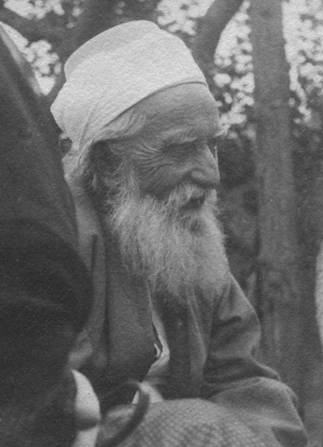
John Bosch of California longed for ‘Abdu’l-Bahá to come West in 1912, and years later told the story to Marzieh Gail. But it was not the same with Thornton Chase. That great man, who had been a captain in the Civil War, a student at Brown University, and later Superintendent of Agencies for the Union Mutual Life Company, and was 'the first to embrace the Cause of Bahá’u’lláh in the Western world'--felt that the Bahá’ís, himself included, were not worthy of the Master's visit. 'John, don't you think it's too soon? The Bahá’ís aren't ready.' 'Well, I'm ready for Him,' said John. As the Master reached San Francisco, down in Los Angeles Thornton Chase died. 'It was too much for him,' John told me. All Thornton Chase's Bahá’í papers and books, and five or six calligraphies by Mishkín-Qalam, were willed to John. Mr. Chase had sent on most of his Tablets to the Chicago archives, but John received about ten of them in a tin box. Mrs. Chase burned some fifteen hundred of her husband's letters (not Tablets) before John could get to Los Angeles.
Source: Marzieh Gail, “‘Abdu’l-Bahá: Portrayals from East and West,” in Dawn Over Mount Hira and Other Essays (George Ronald, 1976), p. 206.
Collected from bahaistories.com (Subject: archives).
Cite this story
Various. *bahaistories.com archive*. https://bahaistories.com/subject/archives
Record yourself reading this story
Recording stays on this device only. Nothing is uploaded.
Related stories
Thornton Chase, the First American Believer
The life of Thornton Chase, whom ‘Abdu’l-Bahá called “the first American believer,” from his long spiritual search to his service in Chicago, and the Master’s visit to his grave in 1912.
John Bosch Meets the Master
In April 1912 John Bosch set out to meet ‘Abdu’l-Bahá and, after a detour to Washington, found Him in New York. The Master told him that with him it was the heart that speaks, and welcomed him as one of the family.
Asleep on John Bosch’s Shoulder
In New York in 1912, John Bosch rode beside ‘Abdu’l-Bahá on the way to a luncheon at the Kinneys’ home, and the Master slept on his shoulder for the whole drive.
Thornton Chase, the First American Believer
Thornton Chase became a Bahá'í in Chicago in 1894. 'Abdu'l-Bahá named him Thábit, the Steadfast, and in 1912 made a special journey to his grave in Inglewood, California.