Westminster Bells: The Master Walks in London, 1911
Lady Blomfield, The Chosen Highway, (1940), Bahá'í Publishing Trust
When in Bahá'í history
London (today: London, United Kingdom)
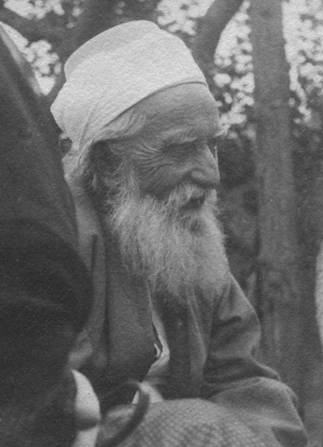
In The Chosen Highway Lady Sara Louisa Blomfield gives a careful chapter to the September 1911 visit of ‘Abdu’l-Bahá to London, the first journey of the Master to England. She had the privilege of receiving Him in her own house at 97 Cadogan Gardens, in the quiet residential district of Chelsea, for the weeks of His stay.
She records the rhythm of the household with the disciplined warmth of one who knew that she was watching what would, in time, be history. The Master rose early; He prayed; He took a small breakfast; He received visitors all morning; He often spoke to the great audiences of the City Temple or to the gatherings of women in the drawing-rooms of Mayfair in the afternoon; He returned at evening for further conversation in the front room of Cadogan Gardens.
In one chapter she preserves an evening that the household itself preserved as one of the small marvels of His stay. The Master had dined; He had received the day’s last visitors; He had stepped out for the air on the small balcony that looked, across the rooftops of west London, toward Westminster.
The bells of Westminster, that evening, were ringing for the hour. The peal carried, across the air of the autumn city, with the thin clarity that the late-summer evenings in London sometimes give. The Master stood at the rail of the balcony and listened.
The bells of Westminster sounded across the city, and He stood on the balcony to listen.
He turned, after the peal, to Lady Blomfield. The bells, He remarked, were beautiful. Their making, He said, had been the work of devout men long ago who had wished to call the city to prayer. The city no longer kept the prayer in the way the makers had imagined; the bells continued to ring nevertheless. He listened to them, the recollection preserves Him as saying, with the same reverence with which one might listen to the adhán of a muezzin at the same hour in Damascus or in Tihrán. The bells had not changed; the city had changed; the voice of the bells continued to call.
Lady Blomfield writes the small scene with restraint. The Master, in His month at Cadogan Gardens, would meet bishops, suffragists, journalists, theosophists, members of the aristocracy, and the poor of the East End. He would receive, in private interview, hundreds of inquirers. He would speak in public from City Temple and from the pulpit of the Reverend Wilberforce in Westminster.
But He had stood, that one evening, simply to listen to the bells of a Western city. The Cause He had brought, the chapter suggests by its placing of the small scene, was the Cause that recognised the prayer in every reverent sound — the bells of Westminster as well as the call of the muezzin, the chant of the Gospel as well as the prayer of the Qur’án.
Source: Lady Blomfield, The Chosen Highway. Public domain; quotations preserved as Lady Blomfield set them down.
Cite this story
Blomfield, L.. (1940). *The Chosen Highway*. Bahá'í Publishing Trust.
Record yourself reading this story
Recording stays on this device only. Nothing is uploaded.
Related stories
Among the Children of the East End
In *The Chosen Highway* Lady Blomfield records an afternoon in September 1911 when 'Abdu'l-Bahá visited a poor district of east London — a settlement house among the dock-workers' families — and spoke to a hall of children who had never before heard a man speak as one of them.
St. John's Westminster: The Master in an English Pulpit
In *The Chosen Highway* Lady Blomfield records the Sunday evening, 17 September 1911, when 'Abdu'l-Bahá ascended for the first time the pulpit of an English church — St. John's Westminster, at the invitation of the Reverend Archdeacon Wilberforce — and addressed the great congregation that had filled the building to hear Him.
The Bells of London
One quiet evening in London, 'Abdu'l-Bahá stepped out onto a balcony to listen to the church bells ringing across the city.
The Evening the Church Fell Silent
One Sunday evening in London, a great church filled to its doors, and the people waited to hear 'Abdu'l-Bahá speak from a pulpit where only English clergy had ever stood before.