Slow to Tell the Truth -- adapted from a story told by 'Abdu'l-Baha
Baha'i Stories Blog · Read original
When in Bahá'í history
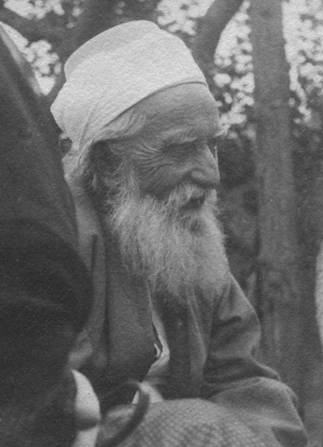
There was once a king who went out travelling about his kingdom in the clothes of a poor and humble man in order to observe the conditions of his people. Eventually he journeyed into the desert where he soon became tired, hot and thirsty. Luck was with him, however, and he reached the door of an Arab tent.
The Arab found him outside, exhausted from heat, thirst and hunger, and pulled him inside into the shade. When the king had revived he asked the Arab for food and drink, which was duly brought to him.
The king now regretted travelling in disguise and wished he was back in his palace. He wished to have the Arab help him to return, but fearing that the Arab would not believe him if he announced who he was straight away, he decided to broach the subject gradually.
"Do you know who I am?" he asked the Arab, as he ate.
"Indeed, no," replied the Arab.
"Then I must tell you that I am a soldier in the army of the king."
The Arab replied courteously that he was delighted to be able to help a brave man.
The king ate and drank some more.
"Do you really know who I am?" he asked again.
"No," replied the Arab, "who are you then, sir?"
"In reality, I am a minister of the king's council."
"I am honoured," replied the Arab graciously, "to be able to aid so distinguished a statesman."
A little more food and drink, and the king again asked: "Do you know who, in fact, I am?"
"Well, sir, tell me again," responded the Arab, with a sigh.
"Now I tell you, in very truth, I am the King himself!" proclaimed the king.
The Arab could stand it no, more. Rising to his feet, he took the food and drink from the king.
"Why are you doing that?" asked the king, astonished.
"Because," answered the Arab, patiently, "I am sure that if you eat and drink any more you will tell me next that you are a Prophet of God, and next that you are God, Almighty Himself. It is better, therefore, for you to stop now, before you tell me any more lies!"
(Adapted from a story told by ‘Abdu’l-Baha, Star of the West, vol. IX, no. 18, February 7, 1919; ‘Stories from the Star of the West’, compiled and edited by Andrew Gash)
Source: Baha'i Stories Blog (https://bahaistories.blogspot.com/2013/01/slow-to-tell-truth-adapted-from-story.html).
Cite this story
Various. *Baha'i Stories Blog*. https://bahaistories.blogspot.com/2013/01/slow-to-tell-truth-adapted-from-story.html
Record yourself reading this story
Recording stays on this device only. Nothing is uploaded.
Related stories
1844: A lonely youth’s encounter with Bahá’u’lláh by a roadside in Mazindaran and his…
One day, in the course of one of His riding excursions into the country, Bahá’u’lláh, accompanied by His companions, saw, seated by the roadside, a lonely youth.
1846: How the Governor of Isfáhán, Muchihr Khán, managed to save the Báb from the death…
circa 1930:Imarat-i-Khurshid No sooner had the Mu’tamíd [Manuchihr Khan, the Governor] been informed of the condemnation pronounced by the ‘ulamás of Isfáhán than he determined, by a plan which he…
1848: Baha’u’llah describes the consternation that seized the Bábís when Tahirih suddenly…
We soon joined her [Táhirih] at Badasht, where We rented a garden for her use, and appointed the same Muhammad-Hádí who had achieved her deliverance, as her doorkeeper.
1848: Baha’u’llah suffered the humiliating bastinado punishment
Town of Ámul, circa 1935 About nine miles from Fort Tabarsi, where Baha’u’llah had planned to join the heroic believers, He and His companions were arrested by the soldiers of the acting governor of…