Keith Ransom-Kehler, the First American Martyr
Shoghi Effendi, God Passes By, (1944), Bahá'í Publishing Trust · Read original
When in Bahá'í history
Iṣfáhán (today: Iṣfáhán, Iran)
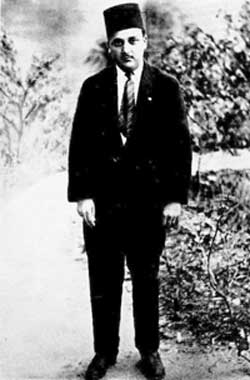
Keith Ransom-Kehler, an American Bahá'í teacher, died in Iṣfáhán in October 1933, after more than a year of teaching work in Persia undertaken at the request of Shoghi Effendi.
Before her Persian mission she had travelled widely as a teacher. In early 1932 she went to India after working in Australia and New Zealand, where, a letter written on the Guardian's behalf said, her work had been "brilliant." The Guardian himself wrote to an Indian believer that he trusted her visit would "lend a fresh impetus" to the work there. From India she went to Haifa, where she rested before starting for Persia.
A letter written on the Guardian's behalf after her passing gives the purpose of the Persian journey: she had been "entrusted by the Guardian with the mission of acquainting our Persian brethren with the basic principles of the Administration and of liberating them from the appalling persecutions to which they have been lately subjected." In God Passes By Shoghi Effendi records that she pleaded the cause of her persecuted brethren in numerous interviews with ministers, ecclesiastics and government officials, and addressed seven petitions to the Sháh. Heedless, he wrote, of the warnings of age and ill-health, she at last died in Iṣfáhán, and she was buried there.
The Guardian's cablegram of October 30, 1933, read in part:
Keith's precious life offered up in sacrifice to beloved Cause in Bahá'u'lláh's native land. On Persian soil, for Persia's sake, she encountered, challenged and fought the forces of darkness with high distinction, indomitable will, unswerving, exemplary loyalty. The mass of her helpless Persian brethren mourns the sudden loss of their valiant emancipator. American believers grateful and proud of the memory of their first and distinguished martyr.
In the same cable he mourned "an invaluable collaborator, an unfailing counselor, an esteemed and faithful friend," and wrote that her international services had entitled her "to an eminent rank among the Hands of the Cause of Bahá'u'lláh." Years later he named her among three heroines of the Formative Age: "Keith Ransom-Kehler, whose dust sleeps in far-off Isfáhán."
A retelling drawn from Shoghi Effendi's God Passes By, Messages to America and Dawn of a New Day, where the quotations can be found.
Cite this story
Effendi, S.. (1944). *God Passes By*. Bahá'í Publishing Trust. https://www.bahai.org/library/authoritative-texts/shoghi-effendi/god-passes-by/
This story shares quotes with 1 other story
“Keith's precious life offered up in sacrifice to beloved Cause in”
Also in
- Keith Ransom-Kehler in Iran— Star of the West Editors, Star of the West
“Bahá'u'lláh's native land. On Persian soil, for Persia's sake, she”
Also in
- Keith Ransom-Kehler in Iran— Star of the West Editors, Star of the West
“encountered, challenged and fought the forces of darkness with high”
Also in
- Keith Ransom-Kehler in Iran— Star of the West Editors, Star of the West
Record yourself reading this story
Recording stays on this device only. Nothing is uploaded.
Related stories
The Forget-Me-Not of Bárfurúsh
Shoghi Effendi sent Keith Ransom-Kehler to Persia to appeal for the entry of Bahá'í literature. The Shah refused to receive her, and she wrote of her failed mission and of a forget-me-not she had picked in Bárfurúsh before she died in Isfáhán.
Keith Ransom-Kehler's Mission to Persia
Shoghi Effendi sent the American believer Keith Ransom-Kehler to Persia to plead for the freedom of the persecuted Bahá'ís there. The Sháh never received her, but she stirred the Persian community, and when she died in Iṣfáhán in 1933 the Guardian called her the first American martyr.
May Maxwell, Crowned with Martyrdom
May Maxwell died only weeks after arriving in South America as a pioneer. The Guardian wrote that she laid down her life in a spirit that merited the crown of martyrdom.
Keith Ransom-Kehler in Iran
Keith Ransom-Kehler went to Persia in 1932 to appeal for the lifting of the ban on Bahá'í literature. She died of smallpox in Isfahán in October 1933, and the Guardian called her the American believers' first and distinguished martyr.