A Fragment from Máh-Kú
bahaistories.com archive · Read original
When in Bahá'í history
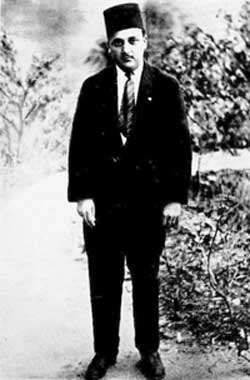
As Shoghi Effendi was completing the construction of the Shrine of the Báb on Mount Carmel, he decided to place a piece of plaster from the cell in which the Báb had been imprisoned in the Castle of Máh-Kú, where He had been denied even a lamp, underneath one of the tiles in the dome of the Shrine. The Hand of the Cause Leroy Ioas, with the assistance of a workman, prepared a place for the silver case containing the plaster. Shoghi Effendi approached the Shrine, and Mr. Ioas wished to precede him in climbing up the scaffolding, to test its strength, but the Guardian said, "You forget, I am a mountaineer."
Source: Anita Ioas Chapman, Leroy Ioas, Hand of the Cause of God, p. 224. Shoghi Effendi reported placing the fragment of the plaster ceiling of the Báb's prison cell beneath the gilded tiles of the dome in a cablegram of Riḍván 1953 (Messages to the Bahá'í World 1950–1957).
Collected from bahaistories.com (Subject: shrine-bab).
Cite this story
Various. *bahaistories.com archive*. https://bahaistories.com/subject/shrine-bab
Record yourself reading this story
Recording stays on this device only. Nothing is uploaded.
Related stories
The Guardian’s Unfinished Plans
Leroy Ioas recalls that until Shoghi Effendi passed away in England he was sending cables about work to finish before his return, which suggests he did not expect to die.
Like a Drop Beside the Ocean
Leroy Ioas recalls the Guardian's humility: Shoghi Effendi never spoke of "the days of the Guardian", and he stopped Ioas from ever mentioning his name in the same breath as the Master's.
A Feeling in the Guardian's Heart
Troubled by cables from America, Shoghi Effendi asked Leroy Ioas about a National Assembly meeting, then described the meeting and the spirit behind it himself, explaining that God gave him a feeling in his heart.
The Guardian's Tender Heart
Leroy Ioas recalls how Shoghi Effendi praised even the gardeners, looked at people's good deeds rather than their shortcomings, and bore with great forgiveness the suffering caused by relatives who had turned away from the Cause.