His Mother's Tears
bahaistories.com archive · Read original
When in Bahá'í history
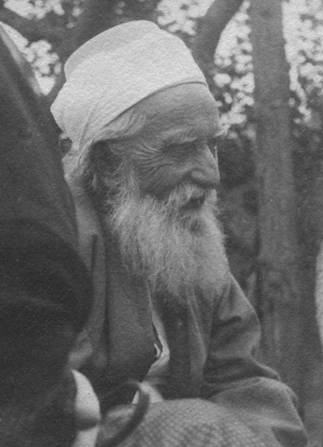
In her memories of ‘Abdu’l-Bahá’s visits to Cambridge, Massachusetts, Florence Breed Khan told of a despairing woman who had come all the way from California to Massachusetts to see Him.
This woman was a widow who had been left with the care of a simple-minded boy, and had also managed to support a brilliant son through the University at Berkeley. Hardly graduated, he stepped outside the garden gate, was struck down by a car and died. Ahead of the woman, bound to the simple-minded one, there now stretched, instead of increasing joy, a future of unending grief.
At the request of Florence's mother, ‘Abdu’l-Bahá visited this woman. He dismissed two Persians who accompanied Him, and Florence was left, to her dismay, with her sketchy Persian, to translate. But her Persian began to flow, she said, and the Master spoke to the woman in words such as these:
'I seem to see your son', He told her, 'like a great bird soaring through the heavens of God's love and grace. He says and asks, "I am completely happy here. Why does my mother weep?" He knows when you cry for him, and when you sorrow and pray. As for him, would you like to hear of his only grief?'
'Oh yes, Master!' she said.
'It is his mother's tears.'
'Oh, Master, what am I to do?'
'It is only human,' He told her gently, 'to grieve and weep and mourn the ones we love. But perhaps you could weep a little less? Perhaps you could temper your sorrow just a little?'
Source: Marzieh Gail, Arches of the Years, ch. 17, pp. 88–89.
Collected from bahaistories.com (Subject: grief).
Cite this story
Various. *bahaistories.com archive*. https://bahaistories.com/subject/grief
Record yourself reading this story
Recording stays on this device only. Nothing is uploaded.
Related stories
Two Pink Roses for a Little Girl
When a little girl was ill, 'Abdu'l-Bahá brought her two pink roses. After she passed away, He consoled her mother by describing the Garden of God, where the Divine Gardener transplants a little tree to a more beautiful place.
Do Not Grieve on Account of the Death of Thy Son
O thou who art hoping for the Kingdom! Thank thou God that He hath guided thee, led thee to the Kingdom of Being, ushered thee under the shade of the bounties of the Lord of Hosts, and that thou hast stepped into the Paradise of ABHA.
Laugh! Laugh!
In New York, two women wept when ‘Abdu’l-Bahá told Margaret He prayed for her late parents. With hands outstretched to calm them, He exclaimed in English, “Laugh! Laugh!”
This World Is No World of Attachment
The sad news about the death of your husband has just reached us; we fully sympathize with you.