The Stolen Charcoal
bahaistories.com archive · Read original
When in Bahá'í history
'Akká (today: Acre, Israel)
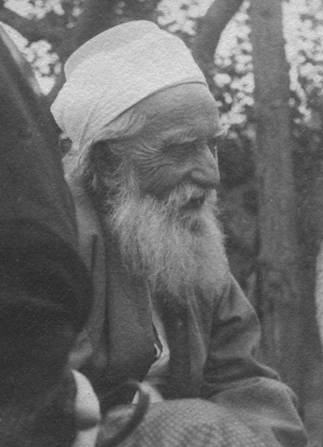
“There was a Christian merchant in ‘Akká who, like many of his fellow-citizens, held the Bahá’ís in scant respect. It happened that he came upon a load of charcoal which some of the Bahá’ís had been permitted to buy outside ‘Akká. (Inside the town they were denied such purchases.) The merchant, noticing that the fuel was of a fine grade, took it for his own use. For him Bahá’ís were beyond the pale, and so their goods could be impounded. When ‘Abdu’l-Bahá heard of the incident, He went to the place where the merchant transacted his business to ask for the return of the charcoal. There were many people about in that office, bent on their trade, and they took no notice of ‘Abdu’l-Bahá. He sat and waited. Three hours passed before the merchant turned to Him and said: ‘Are you one of the prisoners in this town?’ ‘Abdu’l-Bahá said that He was, and the merchant then enquired: ‘What was the crime for which you were imprisoned?’ ‘Abdu’l-Bahá replied: ‘The same crime for which Christ was indicted.’ The merchant was taken aback. He was a Christian, and here was a man speaking of similarity between His action and the action of Christ. ‘What could you know of Christ?’ was his retort. ‘Abdu’l-Bahá calmly proceeded to tell him. The arrogance of the merchant was confronted by the patience of ‘Abdu’l-Bahá. When ‘Abdu’l-Bahá rose to go, the merchant also rose and walked with Him into the street, betokening his respect for this Man—one of the detested prisoners. From then on, he was a friend, even more, a stout supporter.” But regarding the charcoal, the merchant could only say, “The coal is gone,—I cannot return you that, but here is the money.”
Source: Annamarie Honnold, Vignettes from the Life of ‘Abdu’l-Bahá, no. 40, “The stolen coal”, p. 29, quoting H. M. Balyuzi, ‘Abdu’l-Bahá: The Centre of the Covenant, pp. 32–33.
Collected from bahaistories.com (Subject: justice).
Cite this story
Various. *bahaistories.com archive*. https://bahaistories.com/subject/justice
Record yourself reading this story
Recording stays on this device only. Nothing is uploaded.
Related stories
A Prisoner’s Cup of Tea
‘Abdu’l-Bahá recalled a believer imprisoned with Bahá’u’lláh in ‘Akká who, with only a rug, a samovar, a cup and a teapot, made his tea each afternoon with such gratitude and joy that every cup seemed better than the last.
The Burial of the Purest Branch
When Mírzá Mihdí, the Purest Branch, died in 'Akká in 1870, Shaykh Maḥmúd asked for the honour of washing his body while the grieving Most Great Branch kept watch outside the tent. He was buried beyond the city walls.
The Gates of the Barracks Open
Four months after the death of the Purest Branch, the exiles were moved out of the barracks of ‘Akká. Bahá’u’lláh and His family went to the house of Malik; most companions lodged in the Khán-i-‘Avámid, later the first pilgrim house.
Áqá ‘Alíy-i-Qazvíní
‘Abdu’l-Bahá remembers Áqá ‘Alí of Qazvín, a host and teacher of the early believers who was beaten for his faith, followed Bahá’u’lláh to the prison of ‘Akká, and remained content through poverty and illness.