Louis Gregory and the Tie Vote
bahaistories.com archive · Read original
When in Bahá'í history
Chicago (today: Chicago, Illinois, USA)
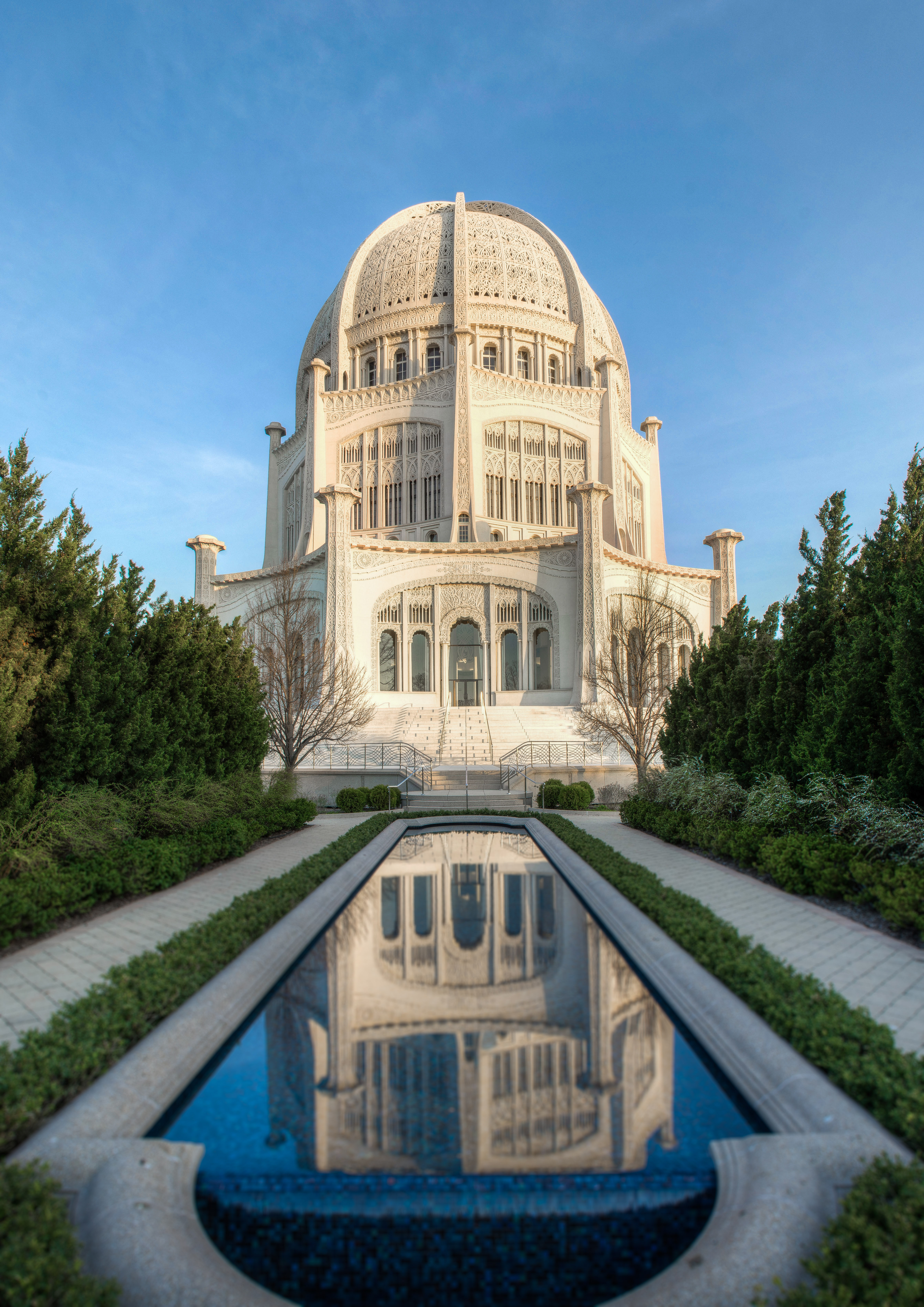
The National Association for the Advancement of Colored People (NAACP), a nationwide, biracial organization that would fight to achieve African American civil rights had invited ‘Abdu’l-Bahá to address their Fourth Annual Conference in Chicago. He spoke at the conference twice on Tuesday, April 30, 1912, once early in the afternoon at Hull House and then to the evening session at Handel Hall, at 40 East Randolph Street in the Loop neighbourhood.
‘Abdu’l-Bahá began His address at Handel Hall by quoting the Old Testament: “Let us make man in our image, after our likeness.” “Let us find out,” He proposed, “just where and how he is the image and likeness of the Lord, and what is the standard or criterion whereby he can be measured.”
Then He asked a series of rhetorical questions: “If a man should possess wealth, can we call him an image and likeness of God? Or is human honor the criterion whereby he can be called the image of God? Or can we apply a color test as a criterion, and say such and such an one is colored with a certain hue and he is, therefore, in the image of God? Can we say, for example, a man who is green in hue is an image of God?”
“Hence we come to the conclusion that colors are of no importance. Colors are accidental in nature. . . . Let him be blue in color, or white, or green, or brown, that matters not! Man is not to be pronounced man simply because of bodily attributes. Man is to be judged according to his intelligence and to his spirit. . . . That is the image of God.”
‘Abdu’l-Bahá concluded by once again conflating and neutralizing common uses of the imagery of black and white, as He had done in Washington: “If man’s temperament be white, if his heart be white, let his outer skin be black; if his heart be black and his temperament be black, let him be blond, it is of no importance.” Colour, in other words, had no effect on the content of a person’s character.
Almost immediately across the road from Handel Hall, at the Masonic Temple at 29 East Randolph Street, another convention was underway that evening. Fifty-eight delegates from forty-three cities were about to elect nine members to the governing board of the Bahá’í Temple Unity, a national body formed to coordinate the largest project ever undertaken by the Bahá’ís in North America: the construction of an enormous house of worship north of Chicago. White fluted columns with capitals wrapped in acanthus leaves surrounded the delegates in Corinthian Hall as they cast their secret ballots.
After the first round of voting there was a tie for ninth place between Frederick Nutt, a white doctor from Chicago, and Louis Gregory, the black lawyer from Washington, DC. In a dramatic departure from the vicious 1912 Presidential election, which raged all around them, each man resigned in favour of the other.
Then Mr Roy Wilhelm, a delegate from Ithaca, NY, stood and put forward a proposal. His motion, seconded by Dr. Homer S. Harper of Minneapolis, recommended that the convention accept Dr. Nutt’s resignation.
The delegates responded unanimously.
To have elected an African American to the governing board of a national organization of largely middle- and upper-class white Americans—and to have done so at the nadir of the Jim Crow era in 1912—was rare in the extreme. Even the NAACP had only elected one black member to its executive committee when it had been formed in 1909.
‘Abdu’l-Bahá’s assault on the colour line was beginning to bear fruit.
Source: Jonathan Menon, “The Fallout from a City in Flames,” 239 Days in America (239days.com), April 30, 2012; ‘Abdu’l-Bahá’s words as recorded in Star of the West, vol. 3, no. 3.
Collected from bahaistories.com (Subject: race-unity).
Cite this story
Various. *bahaistories.com archive*. https://bahaistories.com/subject/race-unity
Record yourself reading this story
Recording stays on this device only. Nothing is uploaded.
Related stories
The Storm at the Unity Feast
At the Unity Feast in West Englewood in June 1912, a sudden storm broke just as the meal was announced. Juliet Thompson watched ‘Abdu’l-Bahá sit at a distant crossroad, His face upturned to the sky, until the clouds raced away.
The Marriage of Louis and Louisa Gregory
Near the end of Louis Gregory’s pilgrimage, ‘Abdu’l-Bahá expressed the wish that he and Louisa Mathew, a white English pilgrim, should marry. They did, and their marriage endured many pressures as a symbol of the unity of the races.
A Place of Honor for Louis Gregory
On April 23, 1912, at a Washington luncheon given in 'Abdu'l-Bahá's honor by Ali-Kuli Khan, the Master asked for Louis Gregory, who had not been invited, and gave him the seat of honor at His right.
A Seat of Honor for Louis Gregory
At a luncheon in segregated Washington, D.C., 'Abdu'l-Bahá sent for Louis Gregory, who had not been invited, gave him the seat of honor at His right, and spoke on the oneness of mankind.