Marriages Should Be More Difficult
bahaistories.com archive · Read original
When in Bahá'í history
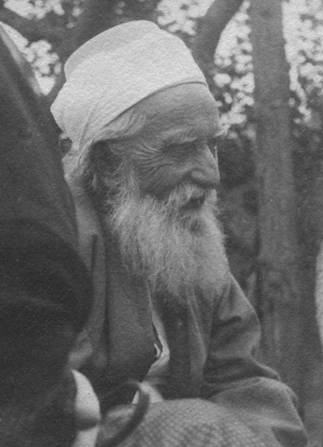
The Master was averse to divorce. In reply to a question, He said "It is not that divorce should be more easy, but that marriages should be more difficult." In all the years that Bahá’u’lláh and ‘Abdu’l-Bahá were dwelling in Syria there was not one case of divorce among the Bahá’ís.
The wife of an Armenian Bahá’í implored the Master to allow her husband to divorce her; many were her accusations against her husband. The Master said to her: "You are a Christian, how can you ask to be separated? Christ Jesus, Whom I reverence, came not to part but to unite." At length, seeing that the woman loved another man, the Master said: "You may divorce her, she is no longer your wife." When the woman fled with the man, taking much of her husband's money with her: "You now see the reason for my consent," said the Master.
Another instance:
‘Abdu’l-Qasim, the gardener of the Ridván, wished to marry an Arab peasant woman; he was advised by Bahá’u’lláh not to do so. But as he was very much in love with her, consent was at length given. In a few years he came saying: "I want to divorce Jamilih, and marry a younger woman." "It is absolutely forbidden, you have married her; you must take care of her to the last moment of your life."
Source: Lady Blomfield, The Chosen Highway, p. 213-214
Collected from bahaistories.com (Subject: divorce).
Cite this story
Various. *bahaistories.com archive*. https://bahaistories.com/subject/divorce
Record yourself reading this story
Recording stays on this device only. Nothing is uploaded.
Related stories
Firm and Steadfast in Tests
O thou who art firm in the Covenant! The letter thou hadst written on 2 May 1919 was received. Praise thou God that in tests thou art firm and steadfast and art holding fast to the Abhá Kingdom.
The Master’s Simple Wedding
On the evening of her wedding Munírih Khánum received Bahá’u’lláh’s blessing, then awaited ‘Abdu’l-Bahá in the bridal room. The service was very simple, with no choir, decorations or cake, just cups of tea.
The Marriage of ‘Abdu’l-Bahá
The following particulars regarding the marriage of ‘Abdu’l-Bahá were kindly supplied to the writer by a Persian historian of the Bahá’í Faith:— During the youth of ‘Abdu’l-Bahá the question of a suitable marriage for Him was naturally one …
Shahr-Bánú Khánum's Broken Betrothal
Bahá'u'lláh intended His niece Shahr-Banu Khanum to marry His eldest Son, but relatives in Tihran prevented the match and forced her into another marriage, which left her in lasting grief.