Listening to the Master Through a Translator
bahaistories.com archive · Read original
When in Bahá'í history
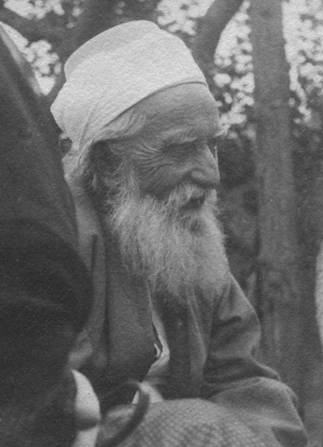
Stanwood Cobb wrote that ‘Abdu’l-Bahá almost never stood still when He spoke. He paced back and forth and His words were ‘enhanced rather than diminished by the presence of a translator’. ‘Abdu’l-Bahá would make a statement which the translator would then translate. While the translator put the words into English, ‘Abdu’l-Bahá would stand and smile, occasionally nodding to affirm important points or as if to approve of the translation. “He constantly illumined this translation with the dynamic power of His own spiritual personality.” When He spoke, “the Persian words . . . boomed forth almost as musically as in operatic recitatives. While He spoke He was in constant and majestic motion. To hear Him was an experience unequaled in any other kind of platform delivery. It was a work of art, as well as a spiritual service. First would come this spiritual flow of thought musically expressed in a foreign tongue. Then, as the translator set forth its meaning to us, we had the added pleasure of watching ‘Abdu’l-Bahá’s response to the art of the translator. It was, all in all, a highly colorful and dramatic procedure.”
Source: Earl Redman, ‘Abdu’l-Bahá in Their Midst (George Ronald, 2011), chapter “Greeting the Statue of Liberty”, pp. 73–74; Stanwood Cobb, Memories of ‘Abdu’l-Bahá (Avalon Press; reprinted from Bahá’í News, July and August 1962), pp. 12–13.
Collected from bahaistories.com (Subject: speeches).
Cite this story
Various. *bahaistories.com archive*. https://bahaistories.com/subject/speeches
Record yourself reading this story
Recording stays on this device only. Nothing is uploaded.
Related stories
Stanwood Cobb's Most Important Interview
In Paris in 1913 'Abdu'l-Bahá asked the teacher Stanwood Cobb what he taught, then asked, "Do you teach the spiritual things?" Cobb counted it his most important interview with the Master.
I Would Take Your Illness upon Myself
When Stanwood Cobb arrived in Haifa ill with dysentery, ‘Abdu’l-Bahá sent His own physician, visited him Himself, and said He wished He could take the illness upon Himself.
On Fire with the Love of the Kingdom
At his last meeting with ‘Abdu’l-Bahá in the United States, Stanwood Cobb was embraced and told three times, “Be on fire with the love of the Kingdom!” He later reflected that these nine words summed up the Master’s teaching.
Do You Teach the Spiritual Things?
In Paris in 1913, ‘Abdu’l-Bahá asked Stanwood Cobb, then teaching at a travel school for boys, whether he taught spiritual things. Cobb answered that there was no time, and the Master’s silence showed him that spiritual things should come first.