So sensitive and sympathetic was the Master to human suffering that He admitted
bahaistories.com archive · Read original
When in Bahá'í history
Paris (today: Paris, France)
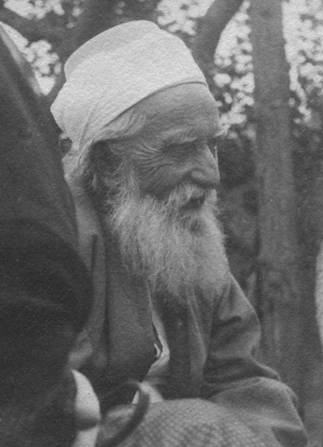
So sensitive and sympathetic was the Master to human suffering that He admitted to surprise that others could be quite oblivious to it. In Paris, He expressed His feelings: 'I have just been told that there has been a terrible accident in this country. A train has fallen into the river and at least twenty people have been killed. This is going to be a matter for discussion in the French Parliament today, and the Director of the State Railway will be called upon to speak. He will be cross-examined as to the condition of the railroad and as to what caused the accident, and there will be a heated argument. I am filled with wonder and surprise to notice what interest and excitement has been aroused throughout the whole country on account of the death of twenty people, while they remain cold and indifferent to the fact that thousands of Italians, Turks, and Arabs are killed in Tripoli! The horror of this wholesale slaughter has not disturbed the Government at all! Yet these unfortunate people are human beings too.'
Source: Honnold, Annamarie, Vignettes from the Life of ‘Abdu’l-Bahá, p. 68
Collected from bahaistories.com (Subject: sympathy).
Cite this story
Various. *bahaistories.com archive*. https://bahaistories.com/subject/sympathy
Record yourself reading this story
Recording stays on this device only. Nothing is uploaded.
Related stories
When a Turkish man, living in Haifa, lost his position, he, his wife
When a Turkish man, living in Haifa, lost his position, he, his wife and children were in desperate need. They went to ‘Abdu’l-Bahá for help and were naturally greatly aided. When the poor man became ill, again the Master stood ready to…
A cat purring beside His chair would amuse Him: this cat, He
A cat purring beside His chair would amuse Him: this cat, He remarked, is indeed joyous, so carefree, so free of…
A companion of ‘Abdu’l-Bahá on His journey in America recorded a
A companion of ‘Abdu’l-Bahá on His journey in America recorded a moment when the Master expressed His anxiety for the future: ‘I am bearing these hardships of traveling so that the cause of God may push on unconstrained. For I am anxious…
A dear friend of the family, Jinab-i-Munib, was taken seriously ill
A dear friend of the family, Jinab-i-Munib, was taken seriously ill. When the boat stopped at Smyrna, Sarkar-i-Aqa (‘Abdu’l-Bahá) and Mirza Musa carried him ashore, and took him to a hospital. The Master brought a melon and some grapes;…