'Abdu'l-Bahá at Stanford University
'Abdu'l-Bahá, The Promulgation of Universal Peace, (1922), Bahá'í Publishing Trust · Read original
When in Bahá'í history
Stanford University (today: Palo Alto, California, USA)
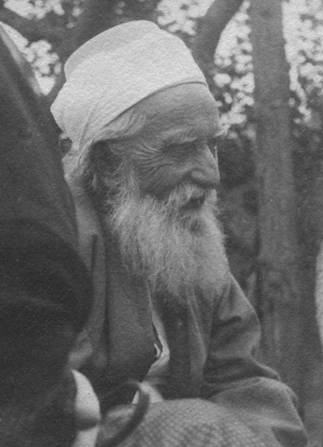
David Starr Jordan, the president of Leland Stanford Junior University in Palo Alto, had visited ‘Abdu’l-Bahá in San Francisco and asked Him to speak at the university. On October 8, 1912, He addressed a large audience there. Mahmúd’s diary counts some 1,800 students and 180 professors, with many others from the area, and says that the hallways were full and people stood outside the entrance. Jordan introduced Him as one of the great religious teachers of the world.
The Master began with science.
The greatest attainment in the world of humanity has ever been scientific in nature. It is the discovery of the realities of things.
The dominion of kings comes to an end, He said, but the sovereignty of science is everlasting. The empires of Greece and Rome had passed away, yet the influence of Plato and Aristotle continued. Kings conquer countries by shedding blood; the scientist invades the regions of ignorance and conquers the realm of minds and hearts.
Then, since the fundamental principle of Bahá’u’lláh’s teaching is the oneness of humanity, He spoke on the oneness of all phenomena. The elements that compose a human body have passed through the mineral, vegetable and animal kingdoms; all material life is fundamentally one. If harmony characterizes the kingdoms below man, He asked, why should man, the noblest of the creatures, wage war against his fellowman?
Man, He said, is endowed with mind, by which he breaks the laws of nature. He soars in the air like a bird, travels beneath the sea in submarines, stores the human voice in a phonograph and imprisons electricity in a lamp. Yet with this supreme gift he still kills his fellowman with the ferocity of a wild animal.
Man is the temple of God. He is not a human temple.
If a man destroys a house, He said, its owner is grieved; how much greater is the wrong when man destroys a building planned and erected by God.
He closed by speaking of Bahá’u’lláh’s call, fifty years earlier, for peace among the nations, and of the folly of fighting over the dust of the earth, which is the tomb of all mankind. He hoped that the students would never be called upon to fight for it.
At the close, Jordan thanked Him for His expression of the brotherhood of man and the value of international peace, and asked the audience for a rising vote of thanks.
A retelling based on The Promulgation of Universal Peace (talk of 8 October 1912 at Leland Stanford Junior University, Palo Alto, California), with details of the occasion from Mahmúd’s Diary. For the fuller account, see the original.
Cite this story
'Abdu'l-Bahá. (1922). *The Promulgation of Universal Peace*. Bahá'í Publishing Trust. https://www.bahai.org/library/authoritative-texts/abdul-baha/promulgation-universal-peace/
Record yourself reading this story
Recording stays on this device only. Nothing is uploaded.
Related stories
Man and Nature
From the time of the creation of Adam to this day there have been two pathways in the world of humanity; one the natural or materialistic, the other the religious or spiritual.
Science and Spiritual Development
If we look with a perceiving eye upon the world of creation, we find that all existing things may be classified as follows: First—Mineral—that is to say matter or substance appearing in various forms of composition.
Science as Worship
Thy letter was received. Praise be to God it imparted the good news of thy health and safety and indicated that thou art ready to enter into an agricultural school.
Universal Peace
This recent war has proved to the world and the people that war is destruction while Universal Peace is construction; war is death while peace is life; war is rapacity and bloodthirstiness while peace is beneficence and humaneness …