Mírzá Muḥammad, Servant of the Hospice
'Abdu'l-Bahá, Memorials of the Faithful, (1915), Bahá'í Publishing Trust · Read original
When in Bahá'í history
'Akká (today: Acre, Israel)
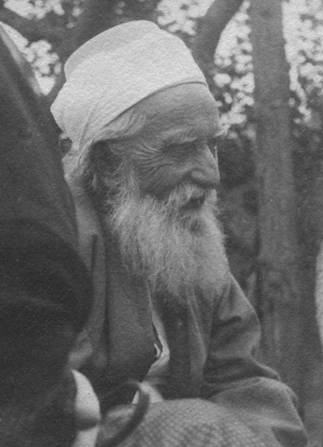
A retelling drawn from 'Abdu'l-Bahá's account of Mírzá Muḥammad, the Servant at the Travelers' Hospice, in Memorials of the Faithful. Words in quotation marks are quoted from that book.
Mírzá Muḥammad was from Iṣfáhán. From an early age the leading divines of that city knew him for his excellent mind. 'Abdu'l-Bahá writes that "he was of gentle birth, his family was known and respected, and he was an accomplished scholar." He had studied philosophy and history, the sciences and the arts, but "he thirsted after the secret of reality, and longed for knowledge of God." He kept on seeking, debating in gatherings of learned men, until he learned of the Cause of Bahá'u'lláh. "Whereas before, he was like a fish taken from the water, now he had come to the wellspring of eternal life."
In Iṣfáhán "he had enjoyed every comfort, and the world was good to him." He left all of it and set out for the Most Great Prison. "He passed over the long miles, suffered intense hardships, exchanged a palace for a prison, and in the Akká fortress assisted the believers and attended upon and served Bahá'u'lláh."
'Abdu'l-Bahá sums up the change in one sentence: "He who had been waited upon, now waited on others; he who had been the master was now the servant, he who had once been a leader was now a captive."
"He had no rest, no leisure, day or night. To the travelers he was a trusted refuge; to the settlers, a companion without peer. He served beyond his strength, for he was filled with love of the friends." The pilgrims were devoted to him and the believers who lived in 'Akká were grateful to him. "And because he was continuously busy, he kept silent at all times."
When Bahá'u'lláh passed away, Mírzá Muḥammad could not bear His absence. He wasted away, weeping and praying day and night to be released. "Lord, free me, free me from this absence," he would cry. At last, 'Abdu'l-Bahá writes, he "took his flight to the world that has no end."
This is a retelling. For the fuller account, see Memorials of the Faithful by 'Abdu'l-Bahá.
Cite this story
'Abdu'l-Bahá. (1915). *Memorials of the Faithful*. Bahá'í Publishing Trust. https://www.bahai.org/library/authoritative-texts/abdul-baha/memorials-faithful/
Record yourself reading this story
Recording stays on this device only. Nothing is uploaded.
Related stories
Mírzá Ja‘far and the Prayer for Healing
A learned seeker from Yazd became a carpenter in Baghdad, gathered provisions for the exiles on the road to Constantinople, and served in the ‘Akká barracks, where he revived after Bahá’u’lláh bade that the prayer for healing be chanted.
The Bookbinder Who Swept the Square
Muḥammad-Hádí, a master bookbinder from Iṣfahán, kept the square before Bahá’u’lláh’s house in ‘Akká swept and sprinkled, and ‘Abdu’l-Bahá recalls how a bowl of barley soup once cured his long fever.
The Carpenter of the Holy Tomb
A quiet master carpenter from Káshán joined Bahá’u’lláh in Baghdad, endured captivity in Mosul, and after the ascension of Bahá’u’lláh made the glass roof over the inner courtyard of His Shrine.
The Dervish from Sístán
Ḥájí Muḥammad Khán, a Balúch dervish, searched far and wide for a true guide and found none until he attained the presence of Bahá'u'lláh in the Most Great Prison. He went back to share the news with his old friends, then settled near Bahá'u'lláh.