Isfandíyár's Debt of Honour
'Abdu'l-Bahá, The Promulgation of Universal Peace, (1922), Bahá'í Publishing Trust · Read original
When in Bahá'í history
Ṭihrán (today: Tehran, Iran)
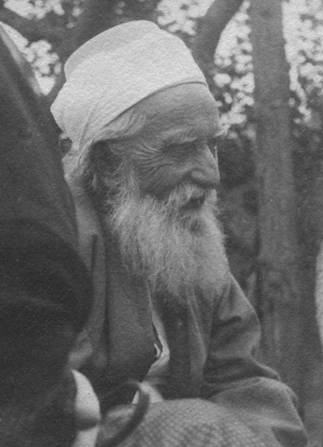
A retelling of an account 'Abdu'l-Bahá gave on 10 November 1912 at the home of Mr. and Mrs. Joseph Hannen in Washington, D.C., recorded in The Promulgation of Universal Peace. Words in quotation marks are 'Abdu'l-Bahá's, as recorded there.
On 10 November 1912 'Abdu'l-Bahá spoke to a gathering of black and white friends at the home of Mr. and Mrs. Joseph Hannen in Washington. "I am very happy that white and black are together," He told them. To show that character, not colour, is what matters in the sight of God, He spoke of a man He had known as a child in Persia.
"I had a servant who was black; his name was Isfandíyár. If a perfect man could be found in the world, that man was Isfandíyár. He was the essence of love, radiant with sanctity and perfection, luminous with light." Isfandíyár had died fifty years before, He said, yet He was still moved to tears whenever He thought of him.
Isfandíyár was the faithful servant of Bahá'u'lláh and "was entrusted with His secrets." When Bahá'u'lláh was in prison in Ṭihrán, the Sháh wanted Isfandíyár found, and perhaps more than a hundred officers were set to search for him. Had they caught him, 'Abdu'l-Bahá said, they would have tortured him to make him reveal Bahá'u'lláh's secrets. "But Isfandíyár with the utmost dignity used to walk in the streets and bazaars."
At that time 'Abdu'l-Bahá, His mother and His sister were living in a house near a corner, and because enemies often harmed them they meant to move to a place where no one knew them. At midnight Isfandíyár came to the house. 'Abdu'l-Bahá's mother warned him that a hundred policemen were looking for him and that they would torture him if they caught him. "Go away!" she told him. "Do not stay here."
He answered: "I cannot go because I owe money in the street and in the stores. How can I go? They will say that the servant of Bahá'u'lláh has bought and consumed the goods and supplies of the storekeepers without paying for them. Unless I pay all these obligations, I cannot go. But if they take me, never mind. If they punish me, there is no harm in that. If they kill me, do not be grieved. But to go away is impossible. I must remain until I pay all I owe. Then I will go."
For one month he went about the streets and bazaars. He had things to sell, and from what he earned he gradually paid the creditors. The debts, 'Abdu'l-Bahá explained, were not really his own: "all our properties had been confiscated. Everything we had was taken away from us. The only things that remained were our debts. Isfandíyár paid them in full; not a single penny remained unpaid." Then he came to the family, said good-bye and went away.
After Bahá'u'lláh was released and exiled to Baghdád, Isfandíyár came there and asked to stay in His household. Bahá'u'lláh said to him: "When you fled away, there was a Persian minister who gave you shelter at a time when no one else could give you protection. Because he gave you shelter and protected you, you must be faithful to him. If he is satisfied to have you go, then come to us; but if he does not want you to go, do not leave him."
The minister did not want to be separated from him. "Where can I find another like him," he said, "with such sincerity, such faithfulness, such character, such power?" Still, he left the choice to Isfandíyár. Because Bahá'u'lláh had told him to be faithful, Isfandíyár stayed with his master until he died.
"He was a point of light," 'Abdu'l-Bahá said of him. Then He drew the lesson for His listeners: "Character is the true criterion of humanity."
This is a retelling. For the fuller account, see 'Abdu'l-Bahá's talk of 10 November 1912 in The Promulgation of Universal Peace.
Cite this story
'Abdu'l-Bahá. (1922). *The Promulgation of Universal Peace*. Bahá'í Publishing Trust. https://www.bahai.org/library/authoritative-texts/abdul-baha/promulgation-universal-peace/
Record yourself reading this story
Recording stays on this device only. Nothing is uploaded.
Related stories
Shaykh Salmán, the Faithful Courier
Every year for some forty years Shaykh Salmán walked from Persia to Bahá'u'lláh with the believers' letters and carried His Tablets home, never losing one. After the ascension he served 'Abdu'l-Bahá in the same way.
The Teacher Promised a Long Life
Hájí Muhammad-Tahir of Yazd begged Bahá’u’lláh for martyrdom and was told he would live long to teach the Cause. He served for decades as a teacher, historian and protector of the families of Yazd’s martyrs.
Mírzá Ja‘far and the Prayer for Healing
A learned seeker from Yazd became a carpenter in Baghdad, gathered provisions for the exiles on the road to Constantinople, and served in the ‘Akká barracks, where he revived after Bahá’u’lláh bade that the prayer for healing be chanted.
The Bookbinder Who Swept the Square
Muḥammad-Hádí, a master bookbinder from Iṣfahán, kept the square before Bahá’u’lláh’s house in ‘Akká swept and sprinkled, and ‘Abdu’l-Bahá recalls how a bowl of barley soup once cured his long fever.