Dr. Susan Moody's First Letters from Tehran
Star of the West Editors, Star of the West, (1910), Bahai News Service · Read original
When in Bahá'í history
Tehran (today: Tehran, Iran)
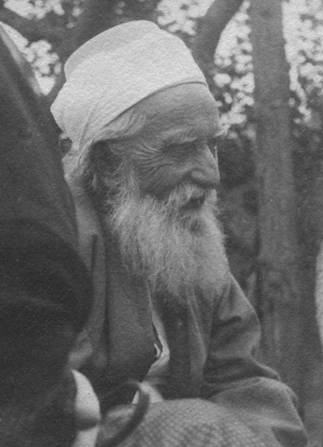
A retelling based on the first volume of Star of the West (1910), the American Bahá'í periodical, which printed letters from Dr. Susan I. Moody and others in Tehran, with two details from Shoghi Effendi's God Passes By. Words in quotation marks are from those sources.
Dr. Susan I. Moody was an American physician and one of a small group of Western Bahá'ís who, in Shoghi Effendi's words in God Passes By, "transferred their residence to Tihrán for the purpose of furthering the manifold interests of the Faith, in collaboration with the Bahá'ís of that city." By January 1910 she was there and writing to friends in America, and the new periodical, then called Bahai News, printed her letters.
A reception
The first issue, dated 21 March 1910, carried a letter from the Bahá'í women of Tehran to the women of Washington and other Western cities. It described a reception for Dr. Moody at the home of Fareeza Khánum. The women read Tablets and discussed spiritual matters with her; she presented a photograph of Mrs. Henrietta Clark Wagner of America, sent for Fareeza Khánum; and after lunch the girls of the Bahá'í school chanted the Tablet of the Clarion for them.
Her own letters
The second issue printed Dr. Moody's own letters. On 11 January 1910 she asked her friends to have the Tehran women's photograph copied and shared in America, since allowing their faces to be shown at all was a new step for them. She reported that "the hospital business is now arranged," and that she would work there with the other doctors in the afternoons. A doctor who was not a Bahá'í had asked her to assist him in an operation.
On 13 February she described a lunch at which her host proposed buying land for a Bahá'í House of Worship in Tehran. Almost at once the men present had appointed a committee of nine to go and see the site. Then she added: "Yet one more piece of news: The girls' school is assured. They will start with accommodations for fifty pupils." It would take, she wrote, "only $1.50 per month to educate a girl," and many families were too poor to pay. She asked for help and ended: "Come over and help us. COME!"
Raising the funds
The school still had to be paid for. On 23 April, during Ridván, she wrote that the Bahá'ís had divided into three groups and gone to three gardens outside the city "to discuss the subject of the girls' school and raise the funds." At her meeting Mírzá 'Alí-Akbar, newly arrived from 'Akká, read a Tablet for the martyrs and told the gathering: "Your relatives and friends gave up their lives for the Cause, and all that we are asked to do today is to educate the children. Shall we not do it?" In a letter four days later she reported that about six hundred tomans had been collected "to found the school for girls."
In June her fellow American Sydney Sprague wrote that the girls' school had not yet started, and that it was hoped it would open in the autumn. The Tehran Board of Consultation asked 'Abdu'l-Bahá to allow Lillian Kappes to come to the city to teach in it, and Dr. Moody asked that Elizabeth Stewart be allowed to come as a nurse to help with her medical work. God Passes By names both women, with Dr. Moody, among those who settled in Tehran, and records that Susan Moody and Lillian Kappes are buried there.
This is a retelling. For the full letters, see Star of the West, Volume 1, Numbers 1, 2, 5 and 7.
Cite this story
Editors, S. O. T. W.. (1910). *Star of the West*. Bahai News Service. https://bahai-library.com/star_of_the_west_volume_1
Record yourself reading this story
Recording stays on this device only. Nothing is uploaded.
Related stories
Dr. Susan Moody and the Tehran Girls' School
The first issues of the Star of the West in 1910 carried letters from Tehran about Dr. Susan I. Moody: a reception in her honour, and her own news of a hospital, a Mashriqu'l-Adhkár and a school for girls.
Caring for the Sick
‘Abdu’l-Bahá visited the sick, sent daily to ask after them, and quietly paid a doctor to care for the poor of ‘Akká. When a poor, crippled woman with measles was shunned, He arranged her care and, at the last, her funeral.
If One Possesses the Love of God
O thou son of the Kingdom! If one possesses the love of God, everything that he undertakes is useful, but if the undertaking is without the love of God, then it is hurtful and the cause of veiling one’s self from the Lord of the Kingdom.
Universal Peace
This recent war has proved to the world and the people that war is destruction while Universal Peace is construction; war is death while peace is life; war is rapacity and bloodthirstiness while peace is beneficence and humaneness …