The Eldest Son in the Garden
Shoghi Effendi, God Passes By, (1944), Bahá'í Publishing Trust · Read original
When in Bahá'í history
Baghdád (today: Baghdad, Iraq)
How this story reached us
- 1.God Passes By (Shoghi Effendi), chapter 14, "The Covenant of Bahá'u'lláh": the paragraphs on 'Abdu'l-Bahá's early life and station
- 2.The Revelation of Bahá'u'lláh, vol. 1 (Taherzadeh), pp. 261 and 281: the crossing to the Garden and the ninth day
- 3.A Flame of Fire (A. Q. Faizi), the chapter on Aḥmad of Yazd: the flood
A retelling based on God Passes By by Shoghi Effendi, with the details of the crossing from The Revelation of Bahá'u'lláh, volume 1, by Adib Taherzadeh. Words in quotation marks are quoted from those books.
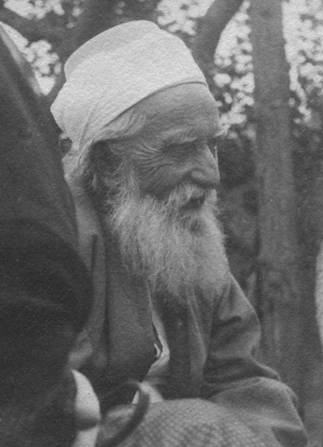
On the afternoon of 22 April 1863 Bahá'u'lláh was ferried across the Tigris to the Garden of Riḍván. Three of His sons went with Him. The eldest was 'Abdu'l-Bahá, who, Taherzadeh records, was eighteen.
In God Passes By, Shoghi Effendi sets down what the Master had already passed through by then. He was born in 1844 on the night the Báb declared His mission to Mullá Ḥusayn. As a boy of nine He was taken to see His Father in the Síyáh-Chál of Ṭihrán, and saw Him "haggard, dishevelled, freighted with chains." While Bahá'u'lláh lay in that prison, a mob of street boys pelted Him with stones and ridiculed Him. He shared the banishment from Persia that followed. When Bahá'u'lláh withdrew to the mountains of Kurdistán, He grieved so much at the separation that He told Nabíl He felt He had grown old, though He was still a child.
Shoghi Effendi writes that His "had been the unique distinction of recognizing, while still in His childhood, the full glory of His Father's as yet unrevealed station, a recognition which had impelled Him to throw Himself at His feet and to spontaneously implore the privilege of laying down His life for His sake." While still in His adolescence in Baghdád, at Bahá'u'lláh's suggestion, He wrote a commentary on a well-known Islamic tradition for 'Alí-Shawkat Páshá, who greatly admired it.
In the Garden of Riḍván Bahá'u'lláh declared to His companions the station that 'Abdu'l-Bahá had recognized years before. The rest of the family was not yet with them. A. Q. Faizi records that the river overflowed on the day Bahá'u'lláh crossed, and that only on the ninth day could His family join Him. On that day, 30 April, 'Abdu'l-Bahá's mother, Ásíyih Khánum, and His sister, Bahíyyih Khánum, came to the Garden with the rest of the household.
In the years of exile that followed, Shoghi Effendi writes, Bahá'u'lláh placed ever greater reliance on Him. He made Him His deputy on many occasions, had Him present His Cause to the public and transcribe His Tablets, allowed Him to shield His Father from His enemies, and gave Him the care of His fellow exiles and companions. Shoghi Effendi adds: "He alone had been accorded the privilege of being called 'the Master,' an honor from which His Father had strictly excluded all His other sons."
This is a retelling. For the fuller account, see God Passes By by Shoghi Effendi.
Cite this story
Effendi, S.. (1944). *God Passes By*. Bahá'í Publishing Trust. https://www.bahai.org/library/authoritative-texts/shoghi-effendi/god-passes-by/
Record yourself reading this story
Recording stays on this device only. Nothing is uploaded.
Related stories
The Greatest Holy Leaf Crosses to the Garden
In April 1863 Bahíyyih Khánum, then in her teens, helped the household prepare for exile while Bahá'u'lláh stayed in the Garden of Riḍván. The Tigris overflowed, and only on the ninth day could the family join Him there.
The Tigris in Flood at Riḍván
On 22 April 1863 Bahá'u'lláh was ferried across the Tigris to the Garden of Riḍván. That same day the river overflowed, and His family could not join Him there until the ninth day.
The Family Reunited in the Garden
Bahá'u'lláh crossed the Tigris to the Garden of Riḍván on 22 April 1863 with three of His sons. The river overflowed that day, and the rest of His family joined Him only on the ninth day, 30 April.
The Family's Road to the Garden
When Bahá'u'lláh was imprisoned in Ṭihrán in 1852, His family was left destitute, and they shared His winter exile to Baghdád. In 1863 a flooded river kept them from joining Him in the Garden of Riḍván until the ninth day.