The Tablet to Auguste Forel
Star of the West Editors, Star of the West, (1922), Bahai News Service · Read original
When in Bahá'í history
Haifa (today: Haifa, Israel)
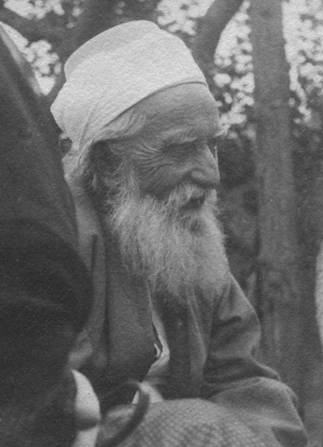
A retelling based on 'Abdu'l-Bahá's Tablet to Auguste Forel as published in Star of the West (November 1922), with the notes printed there and in a later issue, and on Shoghi Effendi's account in God Passes By. Words in quotation marks are quoted from the Tablet in its authorized translation, or from those sources.
Star of the West describes Auguste Forel of Zürich as "one of the distinguished scientific men of Europe." It notes that he was born in 1848, that his fields were entomology and psychology, and that he held the chair of psychiatry at Zürich for many years. Among his books was a study of the mental powers of ants.
Forel wrote to 'Abdu'l-Bahá, and 'Abdu'l-Bahá replied in a Tablet dated in Haifa, 21 September 1921, about two months before His passing. It begins: "O revered personage, lover of truth!" Forel had raised a point about what 'Abdu'l-Bahá had written concerning materialists. 'Abdu'l-Bahá explains that He meant not philosophers in general but "that group of materialists of narrow vision" who accept only what the five senses can perceive, and that thinkers such as Socrates, Plato and Aristotle "are indeed worthy of esteem and of the highest praise."
He then turns to the mind and the soul. The powers of the mind, He writes, are properties of the soul, "even as the radiation of light is the essential property of the sun." The mind grows and weakens and needs a sound body, but the soul does not depend on the body. "The mind is circumscribed, the soul limitless." Man is part of nature in his body, yet through his mind and soul he discovers nature's hidden secrets and bends its laws to his use, as when he flies through the air or sails the seas.
From the order of the world He reasons to its Author. The countless parts of creation are closely bound together and act on one another, and this requires "an all-unifying Power." The universe "could not have come to exist by itself." The Essence of God cannot be grasped by the human mind, yet "conclusive spiritual proofs assert the existence of that unseen Reality." As for a life beyond this one, the mineral cannot conceive the world of man, "but the ignorance of a thing is no proof of its non-existence."
Star of the West printed an English translation of the Tablet in November 1922, calling it "one of Abdul Baha's last." In January 1923 the magazine reported a kindly letter from Forel about that issue. He had sent an announcement of his own Bahá'í meetings and the statement of Bahá'í principles he used for them, among them that "Between true religion and true science no contradiction can exist." Shoghi Effendi writes in God Passes By that Forel "was converted to the Faith through the influence of a Tablet sent him by 'Abdu'l-Bahá--one of the most weighty the Master ever wrote."
This is a retelling. For the fuller account, see the text of 'Abdu'l-Bahá's Tablet to Auguste Forel, published in Star of the West and reprinted in later Bahá'í collections.
Cite this story
Editors, S. O. T. W.. (1922). *Star of the West*. Bahai News Service. https://bahai.works/Star_of_the_West/Volume_13/Issue_8
Record yourself reading this story
Recording stays on this device only. Nothing is uploaded.
Related stories
'Abdu'l-Bahá's Tablet to The Hague
In December 1919 'Abdu'l-Bahá answered a wartime letter from the Central Organization for a Durable Peace at The Hague. He praised their aim and set out the teachings of Bahá'u'lláh on which a lasting peace must rest.
The Tablets of the Divine Plan
During the First World War 'Abdu'l-Bahá wrote fourteen Tablets to the Bahá'ís of the United States and Canada, giving them a mission to carry the Faith to every land. They were unveiled in New York in April 1919.
A Feast More Happy and More Noble
O thou artery pulsating in the body of the world! Verily I read thy recent letter which indicated conscious joy and abundant happiness from the glad-tidings of the Kingdom of El-Abha.
O Thou Bird of the Rose-Garden of the Love of God!
O thou bird of the Rose-garden of the Love of God!