The Seven Valleys and the Judge of Khániqayn
Adib Taherzadeh, The Revelation of Bahá'u'lláh (Vol. 1 — Baghdád 1853-63), (1974), George Ronald
When in Bahá'í history
Baghdád (today: Baghdad, Iraq)
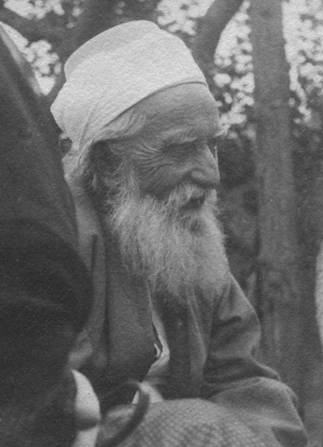
A retelling based on The Revelation of Bahá'u'lláh, volume 1, by Adib Taherzadeh (chapter 8, "The Seven Valleys"). Passages in quotation marks from the Tablet are Bahá'u'lláh's words in the published English translation of the Seven Valleys.
After Bahá'u'lláh returned to Baghdád from the mountains of Sulaymáníyyih, one of the Writings He revealed was the Seven Valleys. Taherzadeh calls it "a masterpiece of mystical composition." It was written in answer to Shaykh Muḥyi'd-Dín, the judge of the town of Khániqayn, who was a Ṣúfí. He was not a Bábí, but he admired Bahá'u'lláh, and he had written to Him "expressing certain thoughts and posing some questions in mystical terms."
The Tablet's subject is the journey of the soul from this world toward nearness to God. Its seven stages were already familiar to the Ṣúfís from the work of Faríd'ud-Dín 'Aṭṭár, whom Taherzadeh calls "an outstanding exponent of Sufism in its early stages." Bahá'u'lláh begins by noting that the stages of the wayfarer's journey "are said to be seven. Some have called these Seven Valleys, and others, Seven Cities."
The seven valleys
The first is the Valley of Search. "The steed of this Valley is patience; without patience the wayfarer on this journey will reach nowhere and attain no goal." The seeker must "cleanse the heart—which is the wellspring of divine treasures—from every marking," and turn away from "imitation, which is following the traces of their forefathers and sires." Taherzadeh explains that the object of this search is to recognize the Manifestation of God for one's own age.
The second is the Valley of Love. "The steed of this Valley is pain; and if there be no pain this journey will never end." Here Bahá'u'lláh writes: "O My Brother! Until thou enter the Egypt of love, thou shalt never come to the Joseph of the Beauty of the Friend; and until, like Jacob, thou forsake thine outward eyes, thou shalt never open the eye of thine inward being; and until thou burn with the fire of love, thou shalt never commune with the Lover of Longing." And: "Love accepteth no existence and wisheth no life: He seeth life in death, and in shame seeketh glory."
The third is the Valley of Knowledge. Taherzadeh notes that "knowledge" translates the word ma'rifat, which joins understanding, recognition and knowledge, and that it does not rest chiefly on learning. Travellers in this valley, Bahá'u'lláh writes, "see the end in the beginning, see peace in war and friendliness in anger." "In the ocean he findeth a drop, in a drop he beholdeth the secrets of the sea."
The fourth is the Valley of Unity, where the wayfarer "pierceth the veils of plurality." "He seeth in himself neither name nor fame nor rank, but findeth his own praise in praising God."
The fifth is the Valley of Contentment. "From sorrow he turneth to bliss, from anguish to joy. His grief and mourning yield to delight and rapture."
The sixth is the Valley of Wonderment, where the traveller "is tossed in the oceans of grandeur." "At every moment he beholdeth a wondrous world, a new creation, and goeth from astonishment to astonishment, and is lost in awe at the works of the Lord of Oneness."
The seventh is the Valley of True Poverty and Absolute Nothingness. "This station is the dying from self and the living in God, the being poor in self and rich in the Desired One. Poverty as here referred to signifieth being poor in the things of the created world, rich in the things of God's world."
Taherzadeh illustrates several of the valleys from the lives of early believers. For the Valley of Love he recalls the companions in Baghdád who, on hearing that Bahá'u'lláh was to leave for Constantinople, would neither eat nor sleep that first night, until His words of counsel consoled them.
This is a retelling. For the fuller account, see The Revelation of Bahá'u'lláh, volume 1, by Adib Taherzadeh, and the Seven Valleys itself in the Bahá'í Reference Library.
Cite this story
Taherzadeh, A.. (1974). *The Revelation of Bahá'u'lláh (Vol. 1 — Baghdád 1853-63)*. George Ronald.
Record yourself reading this story
Recording stays on this device only. Nothing is uploaded.
Related stories
The Hidden Words by the Tigris
In Baghdád, about 1858, Bahá'u'lláh revealed the Hidden Words as He paced the banks of the Tigris in meditation. He described the book as the inner essence of what had been revealed to the Prophets of old.
The Scroll Delivered at Dawn
In Ṭihrán in 1844 Mullá Ḥusayn gave a student from Núr a scroll to hand to Bahá'u'lláh at dawn. Bahá'u'lláh read it aloud, declared that its words had the same regenerating power as the Qur'án, and sent Mullá Ḥusayn a gift of tea and sugar.
The Writings of Bahá’u’lláh
The Writings of Bahá’u’lláh are most comprehensive in their range, dealing with every phase of human life, individual and social, with things material and things spiritual, with the interpretation of ancient and modern scriptures …
In the Presence of Revelation
During a visit to 'Akká, Ḥájí Mírzá Ḥaydar-'Alí was allowed into Bahá'u'lláh's presence while verses were being revealed, and he left a brief account of that memorable occasion.