"I Call Myself One of Them": The Master at the Shelter for the Poor
Star of the West Editors, Star of the West, (1913), Bahai News Service · Read original
When in Bahá'í history
Westminster, London (today: London, England)
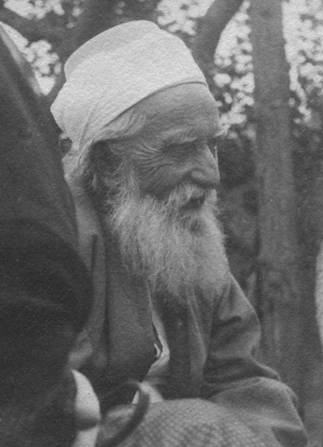
A retelling based on Star of the West, the early Bahá'í magazine, which preserved Isabel Fraser's eyewitness account of 'Abdu'l-Bahá's visit to the shelter for the poor in Westminster. Phrases in quotation marks are words actually recorded as the Master's, or documented facts of that account.
It was Christmas night, 1912. London lay cold and bright under its winter, and across the comfortable parts of the city families were gathered at warm tables. But there is always another city inside the city — the city of those who have no table, no home, and no friends — and on this night a thousand or so of its people had come together in a shelter in Westminster, where each year a Christmas dinner was set out for men who had nowhere else to be. They were the poorest of London: the homeless, the out-of-work, the broken, the forgotten. And into that hall, on that night, came an elderly Persian in a flowing robe and turban, who had crossed half the world and was nearing the end of His life — 'Abdu'l-Bahá.
He had not come to look at them, the way the comfortable sometimes come to look at the poor at Christmas. He had come because, by His own testimony, these were His own people. All His life His company had been with the poor, and He had long since ceased to think of Himself as anything other than one of them. He took His place among the men, and when He spoke to them, the words He chose did not look down from any height. They reached across to them as from one of their own.
"I feel tonight great joy and happiness," He told them, "to be in this place, because My meetings and callings have ever been mostly with the poor, and I call Myself one of them. My lot has ever been with those who have not the goods of this world." Think of who was saying it, and to whom. Here was a Man revered by thousands, who had been received in great houses and grand halls on two continents — telling a room full of homeless men that He counted Himself one of them, that His own lot had been the lot of those who own nothing. It was not a flourish of politeness. He had spent the larger part of His life a prisoner and an exile, often in want, always at the side of the destitute. When He said I am one of you, the men had no reason to doubt it, and every reason to feel, perhaps for the first time in a long while, that they had not been looked down upon but sat beside.
Then He gave them something rarer than the meal in front of them. He gave them back their dignity. The world had taught these men, in a thousand small cruel ways, that their poverty was their shame — that to have nothing was to be nothing. 'Abdu'l-Bahá told them the opposite, and He told it to them as the plain truth of the universe. The Prophets of God, He reminded them, had themselves been poor. Moses Himself had been a mere shepherd. "This will show you," He said, "that in the estimation of God, poverty is greater than the accumulation of wealth." In the estimation of God. Not a consolation, not a kindly half-truth offered to soften a hard night — but a window thrown open onto how things truly stand in the sight of Heaven, where the measure of a life is not the goods it has piled up but the soul it has become. The men, the account preserves, listened intently; some of the hungriest among them forgot, for a while, even to eat.
And the Master did not let the night end only in words. Before He left He put into the hands of the officer in charge — a Colonel of the shelter — twenty golden sovereigns and many handfuls of silver, so that the same poor men might sit down to another like feast on New Year's night, a week away. He was thinking past the evening in front of Him to the cold week to come; He wanted the joy to last beyond His own visit. When the men learned what He had done — that this stranger had provided for their gladness on a night He would not even be there to share — they sent up, the account says, a rousing cheer of farewell after Him as He went out into the December dark.
There is something in this scene that gathers up the whole of the Master's life. He had spent decades caring for the poor of 'Akká with His own hands; He had moved among the destitute of New York and the working people of London; and here, on a Christmas night near the end, He did the same simple thing once more. He came to the people the world overlooks, told them they were His kin, restored to them the dignity the world had stolen, and left them better provided for than He found them. The grandeur of the occasion was nowhere in the room; the men had no goods, no standing, no name. What was in the room was the oneness of the human family, made real — a revered Personage and a thousand homeless men, joined in one company, because He refused to stand above them and instead took His place among them.
This is the beauty the Feast of Jamál is named for. Not beauty of station or of circumstance — there was none of that in a Westminster shelter on a winter night — but the beauty of a soul so emptied of pride that it could sit among the poorest of the poor and call them, truthfully, its own. 'Abdu'l-Bahá did not merely teach that all people are one family. On Christmas night, among men whom the world had cast out, He made Himself their brother, and proved it with His words, His honour, and His gold.
This is a retelling. For the fuller account, see Isabel Fraser's report in Star of the West.
Cite this story
Editors, S. O. T. W.. (1913). *Star of the West*. Bahai News Service. https://bahai-library.com/star_of_the_west_volume_1
Record yourself reading this story
Recording stays on this device only. Nothing is uploaded.
Related stories
The Image and Likeness of God: Lua Getsinger and the Sick Man of 'Akká
On pilgrimage to 'Akká, Lua Getsinger longed to serve 'Abdu'l-Bahá. He gave her the chance — and sent her to a poor, sick, friendless man in the filthiest quarter of the city. When she recoiled from the squalor, the Master taught her the hardest and most beautiful lesson of her life: whoever would serve God must serve his fellow man, for in every human being is the image and likeness of God.
One Tree, Many Leaves: The Master's Farewell in London
At the close of His first visit to the West, 'Abdu'l-Bahá gave a farewell address at a London settlement house built to serve the working poor and disabled children. To a hall of some four hundred and sixty people of every background, He likened the whole of humanity to a single tree — the nations its branches, the peoples its leaves and buds and fruits — and declared the whole earth one home, bathed in the oneness of God's mercy.
Honour Given to the Lowly: The Master and the Forgotten
The recollections gathered in The Chosen Highway preserve a way of living that astonished every visitor to 'Abdu'l-Bahá's household: He treated servants as honoured family, received the poorest as cherished guests, and accepted no deference for Himself. To the people the world overlooked, He gave the one thing they were never given — dignity. It is a portrait of honour not claimed but bestowed.
The Master and the Blind Man
A short paraphrase from the Baha'i Stories Blog about a small encounter on a Washington sidewalk: a blind beggar at the corner of the boarding-house street, the Master's daily greeting to him, and the small daily coin pressed into his palm.