The Question That Humbled a Scholar: Mírzá Abu'l-Faḍl and the Glory of the Cause
Bahá'í Chronicles editors, Bahá'í Chronicles · Read original
When in Bahá'í history
Tihrán (today: Tehran, Iran)
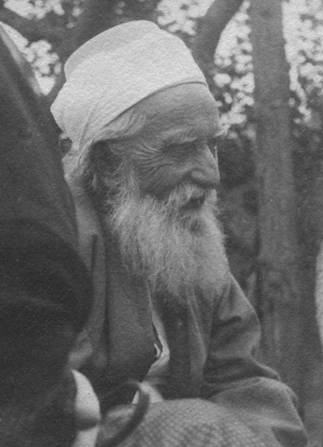
A retelling based on the account of Mírzá Abu'l-Faḍl in Bahá'í Chronicles, which gathers the documented biographies of the heroes and scholars of the Faith. Short phrases in quotation marks are words preserved in that account.
In the Persia of the nineteenth century, learning was a kind of throne. A man who had mastered the religious sciences — the law, the traditions, the philosophy, the long chains of commentary that the centuries had piled up — sat high above his fellows, and his word could settle a dispute or condemn a heresy. Among such men, few sat higher than Mírzá Abu'l-Faḍl of Gulpáygán. He had risen, while still young, to be the head of one of the great religious colleges of the capital. His command of theology and philosophy was famous; students and divines sought him out; his judgement was prized. He was, by every measure his society knew, a successful and formidable man — and a confident one.
It was inevitable that such a man would, sooner or later, encounter the followers of Bahá'u'lláh, and inevitable too that he would regard them with the settled disdain of the learned for the unlettered. The Bahá'ís he met were, many of them, people of no scholarly standing — tradesmen, artisans, the plain folk of the bazaar. That they should imagine themselves to have recognised the Promised One of all ages, while the trained doctors of religion had not, struck Mírzá Abu'l-Faḍl as an absurdity scarcely worth refuting. When he condescended to debate them, the contest seemed to him no contest at all. He could marshal texts they had never read, deploy distinctions they could not follow, and turn their arguments inside out with the ease of a master playing against beginners. He won, and went away unmoved.
But the Bahá'í Chronicles preserve the turning of it, and the turning came not through a victory but through a defeat — and not at the hands of a scholar but at the hands of a humble believer whose name has come down to us without any title of learning at all. The account tells of a simple, unlettered Bahá'í who fell into conversation with the great divine and put to him a question. It was not a question of high theology. It was, on its face, almost a homely thing, the kind of question a plain man asks. And Mírzá Abu'l-Faḍl, who had answered every learned objection ever raised against him, found that he could not answer it.
The Chronicles relate that the believer's reasoning turned on a matter of ordinary purity — the kind of everyday ruling about what is clean and unclean that the religious law treats at length — and that the simple man pressed the logic of it in a way that exposed an inconsistency the scholar's whole apparatus of learning could not resolve. Abu'l-Faḍl, accustomed to commanding any debate, gave an answer; the believer, undismayed by the divine's eminence, showed that the answer would not stand; the scholar tried again, and again the plain logic of the question closed every door. He who had never been at a loss was, for once, at a loss. The learning that had been his throne could not lift him over a child's question.
What is remarkable in the account is not chiefly the cleverness of the question. It is what the silence did to the man. A smaller soul, caught out, would have covered the failure with a flourish of words and walked away with his dignity intact and his heart unchanged. Mírzá Abu'l-Faḍl did not. The encounter pierced him. It opened in his certainty a crack through which a doubt could enter — the suspicion that his vast learning, for all its grandeur, had not in fact brought him to the truth, and that these unlettered people might have found, by some other road than scholarship, something he had missed. He could no longer regard them with simple contempt. Once the contempt was gone, he could begin, at last, to look.
What he then did is the measure of his greatness, and it is the part of the story that belongs most truly to the Feast of Splendour. He did not turn his back on the humiliation; he followed it. He began to study the Faith he had despised — not now to refute it, but to understand it. He read the Tablets of Bahá'u'lláh. And the same powerful mind that had won every argument was now turned, with all its force, upon the actual claim of the Revelation, and it was overwhelmed. The Chronicles record that among the writings that worked upon him were Tablets in which Bahá'u'lláh had foretold events not yet come to pass — and that when those events unfolded as the words had said, the proof reached Abu'l-Faḍl in a way no debate ever could. The glory of the Cause had not argued him into submission. It had simply, in the end, shown itself to him; and the great scholar bowed.
In the year 1876 Mírzá Abu'l-Faḍl declared his faith in Bahá'u'lláh. The man who had sat upon the throne of learning came down from it and laid the whole of his learning at the threshold of the Cause. And here the glory of the Revelation is seen from its other side. For Bahá'u'lláh did not waste the gift of so trained a mind. The faith that had cost Abu'l-Faḍl his pride became the labour of his life. He suffered imprisonment for the Cause more than once. He travelled, at Bahá'u'lláh's bidding and afterward at the bidding of 'Abdu'l-Bahá, carrying the teachings into Egypt, into the lands beyond the Caspian, and at last across the sea to America, where his learning amazed the professors who came to hear him. The very scholarship that had once stood between him and the truth became, after his surrender, one of the surest instruments for proclaiming it. He chose for himself the name by which he is remembered — Abu'l-Faḍl, which may be rendered father of virtue — and he became one of the most celebrated scholars the Faith has known.
There is a particular fittingness in remembering this story at the Feast of Bahá, the Feast of Splendour. For it shows where the splendour of the Revelation lies. It does not lie in winning arguments; Mírzá Abu'l-Faḍl could win arguments, and they left him cold. It lies in a glory that finds the proud through the humble, that confounds the learned with a plain man's question, and that, once recognised, transforms a lifetime. The most learned man of his age was brought to the Glory of God not over the heads of the lowly but through them — and that inversion is itself a ray of the Splendour the Feast exists to honour.
All his learning could answer every argument, and could not answer one plain question; and in that silence the glory of the Cause found him.
This is a retelling. For the fuller account, see the biography of Mírzá Abu'l-Faḍl in Bahá'í Chronicles.
Cite this story
editors, B. C.. *Bahá'í Chronicles*. https://bahaichronicles.org/mirza-abul-fadl/
Record yourself reading this story
Recording stays on this device only. Nothing is uploaded.
Related stories
A Great and Universal Mind: Nabíl-i-Akbar
He was the most favoured disciple of the foremost religious teacher of his day, the one student raised to the rank of mujtahid, "a universal man, in himself alone a convincing proof." Then Áqá Muḥammad-i-Qá'iní met Bahá'u'lláh — and the scholar who had mastered theology, philosophy, and mysticism found a knowledge before which all his learning bowed.
The Pure One: How Táhirih Received Her Names
Before the world knew her as Táhirih, the gifted poet-theologian of Qazvín was given one name by the teacher she never met in person — Qurratu'l-'Ayn, Solace of the Eyes — and another, years later, at the conference of Badasht, where the assembled believers proclaimed her Táhirih, the Pure One. Two names, conferred by two hands, for a woman who became the herald of a new Day.
A Trust Carried to Ṭihrán: The Báb's Gift Reaches Bahá'u'lláh
Soon after the Declaration, the Báb sent Mullá Ḥusayn northward to Ṭihrán to deliver a sacred trust to one He did not name. Guided by a midnight conversation with a teacher's pupil, Mullá Ḥusayn entrusted a scroll of the Báb's Writings to be carried at dawn to Bahá'u'lláh — who, upon reading it, affirmed its truth at once. It was among the first recognitions of the new Revelation in the capital.
The First Word Reaches Its Lord: A Scroll Carried to Bahá'u'lláh
On the night the Báb declared His mission in Shíráz, He entrusted Mullá Ḥusayn with a sacred charge: to find in Ṭihrán a soul of a noble house and deliver into His hands a scroll of the newly revealed Word. The young schoolteacher who carried it never learned the meaning of his errand — but Bahá'u'lláh read the Words, and the first utterance of the new Revelation reached the One for Whom, unknown to all, it had been written.