By the Light of a Single Lamp
Shoghi Effendi, God Passes By, (1944), Bahá'í Publishing Trust · Read original
When in Bahá'í history
Mount Carmel, Haifa (today: Haifa, Israel)
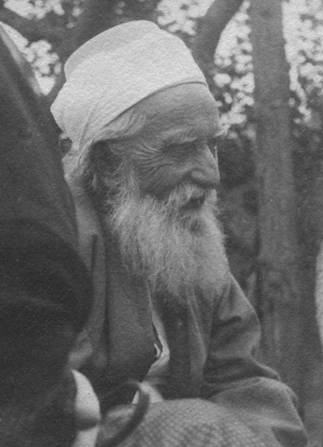
A retelling based on God Passes By by Shoghi Effendi, which records the entombment of the Báb's remains on Mount Carmel. Words in quotation marks are Shoghi Effendi's, or 'Abdu'l-Bahá's as quoted in that book.
After the Báb was executed in Tabríz in 1850, His body and that of His companion were taken at night from the edge of the moat where they had been cast, laid in a wooden casket and carried to a place of safety. For almost fifty years, following Bahá'u'lláh's instructions, believers in Persia kept the remains hidden, moving them from shrine to shrine and house to house in and around Ṭihrán. In 1899, at 'Abdu'l-Bahá's direction, a party of believers carried them by way of Iṣfahán, Kirmánsháh, Baghdád and Damascus to Beirut, and from there by sea to 'Akká. They arrived on 31 January 1899.
That same year 'Abdu'l-Bahá laid, with His own hands, the foundation-stone of a Shrine for them on Mount Carmel, on the site "blessed and selected by Bahá'u'lláh." The building took almost ten years. The owner of the land refused for a long time to sell; officials had to be reassured again and again; His enemies spread false accusations about the purpose of the building; and for years He was confined to 'Akká and could not supervise the work. "Every stone of that building, every stone of the road leading to it," He was many a time heard to remark, "I have with infinite tears and at tremendous cost, raised and placed in position." The Bahá'ís of Rangoon made a marble sarcophagus as their offering and shipped it to Haifa.
On Naw-Rúz 1909, the first Naw-Rúz He celebrated after His release, 'Abdu'l-Bahá had the marble sarcophagus "transported with great labor to the vault prepared for it, and in the evening, by the light of a single lamp, He laid within it, with His own hands," in the presence of believers from East and West, "the wooden casket containing the sacred remains of the Báb and His companion."
Shoghi Effendi describes what followed. 'Abdu'l-Bahá, "Who had cast aside His turban, removed His shoes and thrown off His cloak, bent low over the still open sarcophagus, His silver hair waving about His head and His face transfigured and luminous, rested His forehead on the border of the wooden casket, and, sobbing aloud, wept with such a weeping that all those who were present wept with Him. That night He could not sleep, so overwhelmed was He with emotion."
Afterward He announced the news to His followers in a Tablet. "The most joyful tidings is this," He wrote, "that the holy, the luminous body of the Báb ... after having for sixty years been transferred from place to place, by reason of the ascendancy of the enemy, and from fear of the malevolent, and having known neither rest nor tranquillity has, through the mercy of the Abhá Beauty, been ceremoniously deposited, on the day of Naw-Rúz, within the sacred casket, in the exalted Shrine on Mt. Carmel."
In the same Tablet He noted that on that same day of Naw-Rúz a cablegram had come from Chicago, announcing that the believers in the American centers had each elected a delegate and "definitely decided on the site and construction of the Mashriqu'l-Adhkár," the first Bahá'í House of Worship in the West.
This is a retelling. For the fuller account, see God Passes By by Shoghi Effendi, chapter 18.
Cite this story
Effendi, S.. (1944). *God Passes By*. Bahá'í Publishing Trust. https://www.bahai.org/library/authoritative-texts/shoghi-effendi/god-passes-by/
Record yourself reading this story
Recording stays on this device only. Nothing is uploaded.
Related stories
The Báb Laid to Rest on Mount Carmel
For nearly sixty years believers kept the remains of the Báb hidden from His enemies. On Naw-Rúz 1909 'Abdu'l-Bahá laid them with His own hands in a tomb on Mount Carmel, on the spot Bahá'u'lláh had chosen, and wept over the casket.
The Hidden Journey of the Báb's Remains
After the martyrdom of the Báb in 1850, believers hid His remains in shrines and houses in Ṭihrán for nearly fifty years, then carried them to the Holy Land, where 'Abdu'l-Bahá laid them to rest on Mount Carmel in 1909.
The Path to the Báb’s Shrine
After the construction of the Báb’s Shrine on Mount Carmel, it was the wish and intention of ‘Abdu’l-Bahá—may our lives be sacrificed for His holy dust—to open a path that would lead directly from the Shrine to the German Avenue.
The Center of the Covenant
Bahá’u’lláh indicated in many ways that ‘Abdu’l-Bahá was to direct the Cause after His own ascension.