Nabíl-i-A'ẓam, Poet and Chronicler
Shoghi Effendi, God Passes By, (1944), Bahá'í Publishing Trust · Read original
When in Bahá'í history
Baghdád (today: Baghdad, Iraq)
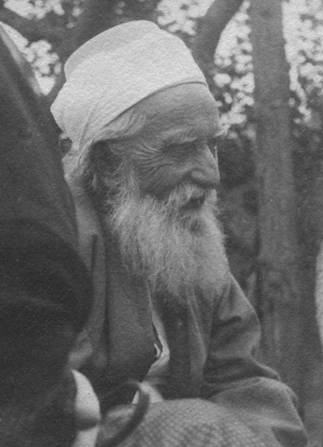
A retelling based on 'Abdu'l-Bahá's Memorials of the Faithful and Shoghi Effendi's God Passes By, with details from the introduction to The Dawn-Breakers. It is told in our own words; words in quotation marks are quoted from those books.
Mullá Muḥammad of Zarand, in Persia, left his family "in the flower of youth," as 'Abdu'l-Bahá writes, and began to teach the Faith. He went to Mesopotamia in search of Bahá'u'lláh but could not find Him. Bahá'u'lláh was then in Kurdistán, living alone in a cave at Sar-Galú, and no news of Him reached 'Iráq. Nabíl found the believers few and their fervour almost gone, and he left, grieving, for Karbilá.
He stayed there until Bahá'u'lláh returned to Baghdád. Then, in 'Abdu'l-Bahá's words, Nabíl "hastened to the presence of Bahá'u'lláh, and became the recipient of great bestowals. He spent his days in gladness now, writing odes to celebrate the praises of his Lord. He was a gifted poet, and his tongue most eloquent; a man of mettle, and on fire with passionate love."
In the years that followed he was sent more than once to Persia. When Bahá'u'lláh left Baghdád for Constantinople, Nabíl put on a dervish's dress and caught up with the convoy on foot. From Constantinople he was sent back to Persia to tell the believers in its cities and villages all that had taken place. He later came to Adrianople, and from there was given "specific orders to travel everywhere" to announce that God was now made manifest.
He reached 'Akká while Bahá'u'lláh was held there under exceptionally severe restrictions. He came to the gate in disguise, but he was informed against and the authorities expelled him. After a time in Safad he made his home in a cave on Mount Carmel, praying and waiting. When the restrictions were lifted he came to Bahá'u'lláh, and after that he was admitted to His presence almost daily.
Bahá'u'lláh gave him the name Nabíl-i-A'ẓam. Shoghi Effendi writes in God Passes By that he "may well rank as His Poet-Laureate, His chronicler and His indefatigable disciple." Nabíl began his chronicle in 1888, with the personal help of Mírzá Músá, the brother of Bahá'u'lláh, and finished it in about a year and a half. Parts of the manuscript were reviewed and approved, some by Bahá'u'lláh and others by 'Abdu'l-Bahá. The first half, which ends with Bahá'u'lláh's banishment from Persia, was translated by Shoghi Effendi and published in English as The Dawn-Breakers.
Nabíl was in 'Akká when Bahá'u'lláh passed away in 1892. He had been granted a private audience during Bahá'u'lláh's last illness, and 'Abdu'l-Bahá chose him to select the passages that make up the Tablet of Visitation. Overcome by grief, he drowned himself in the sea shortly afterwards. 'Abdu'l-Bahá wrote of him: "This distinguished man was erudite, wise, and eloquent of speech. His native genius was pure inspiration, his poetic gift like a crystal stream."
This is a retelling. For the full accounts, see "Nabíl-i-Zarandí" in Memorials of the Faithful by 'Abdu'l-Bahá, and God Passes By by Shoghi Effendi.
Cite this story
Effendi, S.. (1944). *God Passes By*. Bahá'í Publishing Trust. https://www.bahai.org/library/authoritative-texts/shoghi-effendi/god-passes-by/
Record yourself reading this story
Recording stays on this device only. Nothing is uploaded.
Related stories
Zaynu'l-Muqarrabín, Scribe of the Tablets
Mullá Zaynu'l-'Ábidín, once the leading cleric of Najaf-Ábád, became a follower of the Báb and of Bahá'u'lláh, who named him Zaynu'l-Muqarrabín. His careful copies of Bahá'u'lláh's Tablets became a standard for checking published texts.
Nabíl and the Tablet of Visitation
After Bahá'u'lláh's ascension, 'Abdu'l-Bahá asked the chronicler Nabíl to select passages from Bahá'u'lláh's Writings to form the Tablet of Visitation, the text now recited in the Shrines of Bahá'u'lláh and the Báb.
The Sun of Bahá Has Set
Bahá'u'lláh ascended at Bahjí at dawn on 29 May 1892. A telegram beginning "the Sun of Bahá has set" carried the news to the Sultan, and for a week mourners of many faiths gathered at Bahjí to grieve with His family.
Verses Like a Copious Rain
In Baghdád and Adrianople Bahá'u'lláh revealed verses faster than they could be written down. Shoghi Effendi gathers the testimony of those who saw it, including the verses He had thrown into the Tigris.