That Which Eternally Endureth: The Master on Detachment
'Abdu'l-Bahá, Selections from the Writings of 'Abdu'l-Bahá, (1978), Bahá'í World Centre · Read original
When in Bahá'í history
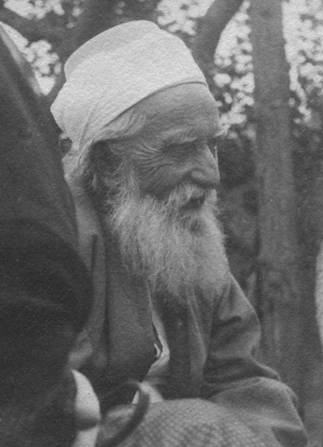
A retelling based on Selections from the Writings of 'Abdu'l-Bahá. The passage at the heart of this story is given in 'Abdu'l-Bahá's own words, set within quotation marks; the surrounding reflection is offered in our own.
Among the letters of 'Abdu'l-Bahá that have been gathered into Selections from the Writings of 'Abdu'l-Bahá, there is a short one — only a few sentences — that holds, in miniature, the whole teaching of the month of the Fast. It was written to a believer, and like so much of the Master's correspondence it begins not with doctrine but with a picture, an image drawn from the ordinary world that any heart can recognise at once.
"Mortal charm shall fade away," He writes, "roses shall give way to thorns, and beauty and youth shall live their day and be no more."
It is worth pausing over how gently, and how unanswerably, that sentence is made. 'Abdu'l-Bahá does not scold; He simply names what everyone already knows and no one likes to dwell upon. The charm of a face will fade. The rose, which is the very emblem of loveliness, will brown and fall and leave the thorn behind it. Youth — that brief season when the body is strong and the future seems endless — will live out its short day and then be gone, as surely as an afternoon. This is not a hard saying. It is the plainest truth there is. What is hard is to let it change how we live, for the whole machinery of the world is arranged to make us forget it, to keep us spending our love and our labour on exactly the things that He says will not last.
And then, having set the fading things before us, He turns the heart toward what does not fade. "But that which eternally endureth," He continues, "is the Beauty of the True One, for its splendour perisheth not and its glory lasteth for ever; its charm is all-powerful and its attraction infinite."
Here is the pivot on which the entire counsel turns. The Master is not telling us that beauty is a lie or that love is wasted; He is telling us that there is a Beauty behind all beauties, an unfading Source from which every lovely thing in the world borrows its passing loveliness — and that this Source alone is worth the full weight of the soul's devotion. The rose is beautiful for a week; the Beauty of the True One is beautiful for ever. The charm of the world tugs at us and then releases us, leaving us empty; the attraction of the Eternal, He says, is infinite, and the soul that yields to it is never left wanting. To love the fading thing as though it were permanent is to set oneself up for grief. To love the Permanent, and to love the fading thing only as a faint reflection of it, is to be anchored in something the years cannot touch.
This is detachment as 'Abdu'l-Bahá teaches it — and it is gentler, and more demanding, than the word usually suggests. Detachment, in His hands, is not a cold withdrawal from life, not a refusal to delight in the rose or to cherish the beloved face. It is a re-ordering of the heart: a steady refusal to let the soul be owned by what is passing, so that it may be free to be filled by what endures. The believer is not asked to stop seeing beauty. The believer is asked to see through it — to let every fading loveliness become a window onto the Beauty that does not fade, rather than a wall that shuts it out.
And the Master does not leave the teaching in the realm of the abstract; He brings it home to the one He is writing to, and through that one, to us. "Well is it then," He writes, "with that countenance that reflecteth the splendour of the Light of the Beloved One!" There is the goal of the whole spiritual life, stated as a blessing: to become a face, a life, that gives back the Light of God — not a mirror turned toward the glitter of the world, catching and losing its passing gleams, but a mirror turned toward the Sun, and shining with a borrowed radiance that will not dim. The countenance that reflects mortal charm will fade with the charm it reflects. The countenance that reflects the Beauty of the True One takes on something of that Beauty's permanence.
"The Lord be praised," He tells His correspondent, "thou hast been illumined with this Light, hast acquired the pearl of true knowledge, and hast spoken the Word of Truth." It is the language of congratulation — the Master rejoicing over a soul that has made the great exchange, that has turned from the perishing to the imperishable and found, in that turning, the one knowledge worth calling knowledge and the one Word worth speaking.
It is no wonder that such a counsel belongs to the Feast of 'Alá', the month of Loftiness and of the Fast. For the Fast is precisely this teaching made into a discipline of the body. Through the long daylight hours of those nineteen days, the believer goes without the food and drink the body craves, and learns, hour by hour, that he is not the prisoner of his appetites — that the loudest demands of the lower self can be heard and quietly set aside for the sake of something higher. The Fast trains the soul to loosen its grip on the fading thing. And 'Abdu'l-Bahá's letter tells the soul what to reach for once the grip is loosened: not nothing, but Everything — the Beauty whose splendour never perishes, whose glory lasts for ever, whose attraction is infinite.
To read these few sentences slowly, in the month of the Fast, is to be handed the inner meaning of the whole month. The roses of this world will give way to thorns; the charm of every face will fade; youth will live its day and be no more. Knowing this, the lofty soul does not despair, and does not cling. It turns, instead, toward the one Beauty that endureth — and begins, quietly, to reflect its Light.
This is a retelling. For the fuller account, see Selections from the Writings of 'Abdu'l-Bahá.
Cite this story
'Abdu'l-Bahá. (1978). *Selections from the Writings of 'Abdu'l-Bahá*. Bahá'í World Centre. https://www.bahai.org/library/authoritative-texts/abdul-baha/selections-writings-abdul-baha/
Record yourself reading this story
Recording stays on this device only. Nothing is uploaded.
Related stories
The Month of the Fast: Severance from All Save God
The nineteenth and final month of the Bahá'í year, 'Alá' — Loftiness — is the month of the Fast. From sunrise to sunset for nineteen days the believer abstains from food and drink, but the heart of the Fast lies elsewhere: in abstinence from the desires of self, and in severance from all save God. This is what gives the month its name.
A Candle Burned to the Wick: Nabíl-i-Zarandí
In the flower of his youth Nabíl-i-Zarandí bade farewell to his family in Zarand and set out to find the One his soul was seeking. From that day he never turned back. Poet, traveller, herald, recluse — he spent his whole life pouring himself out in service to Bahá'u'lláh, holding nothing of the world in reserve, until at the end he could endure separation no longer.
The Man Who Lost His Socks to Prayer: Pidar-Ján of Qazvín
Pidar-Ján of Qazvín was a poor old man who emigrated to Baghdád to be near Bahá'u'lláh, and there gave his days and nights to prayer. So absorbed was he in the remembrance of God that thieves once lifted the goods from his open hands while he chanted, and he did not notice. 'Abdu'l-Bahá remembered him as a soul who walked the earth but travelled the heights of Heaven.
As an example of the methods of ‘Abdu’l-Bahá’s teaching: My father
As an example of the methods of ‘Abdu’l-Bahá’s teaching: My father was having difficulty understanding this matter of Detachment. Just what were we supposed to become detached from? We were taught not to become isolated and detached as…