The Best Bite at the Table
Rúḥíyyih Khánum, The Priceless Pearl, (1969), Bahá'í Publishing Trust
When in Bahá'í history
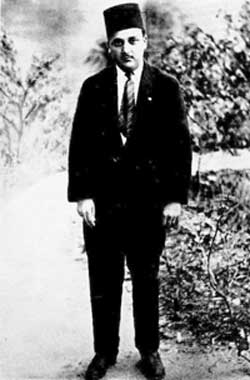
A retelling for children, based on The Priceless Pearl by Rúḥíyyih Khánum.
When Shoghi Effendi was a boy, he lived in the household of his grandfather, 'Abdu'l-Bahá. Many years later he told his wife, Rúḥíyyih Khánum, what lunch time was like in those days, and she wrote it down in her diary.
The maids spread a cloth on the floor and brought in a huge round table with very short legs. They put out some metal plates and some spoons, never enough for everyone, and scattered bread over the table.
'Abdu'l-Bahá came in, sat down and called whoever was there to come and eat with Him. Sometimes He served them rice with His own hand.
When He was about halfway through the meal, His sister Bahíyyih Khánum, known as the Greatest Holy Leaf, came in from the kitchen. She changed her slippers at the door and sat down beside the Master with a little plate of tasty bits of food. Her place was always kept for her.
When the men had finished and gone, the women and the children came in. Then, Shoghi Effendi said, it was very noisy, with children crying and shouting and everyone talking at once. Rúḥíyyih Khánum wrote down what he told her next:
...what the grandchildren used to watch for [himself included] was the mouthful of Khanum's food that she would give to this or that one as it always tasted best.
Every so often Bahíyyih Khánum gave a mouthful of her own food to one of the children. They had a name for it: the mouthful of Khánum. It usually went to Shoghi Effendi, because he was a favorite of hers.
This is a retelling for children. For the fuller account, see "The Mouthful of Khánum".
Cite this story
Khánum, R.. (1969). *The Priceless Pearl*. Bahá'í Publishing Trust.
This story shares quotes with 1 other story
“...what the grandchildren used to watch for [himself included] was”
Also in
- The Mouthful of Khánum— Rúḥíyyih Khánum, The Priceless Pearl
Record yourself reading this story
Recording stays on this device only. Nothing is uploaded.
Related stories
The Mouthful of Khánum
Shoghi Effendi once described to Rúḥíyyih Khánum the noisy family lunches of his childhood, when the grandchildren watched for the mouthful of food the Greatest Holy Leaf would give to one of them. It usually went to him.
Stories from the Childhood of Shoghi Effendi
Shoghi Effendi's boyhood in the household of his grandfather 'Abdu'l-Bahá: his name, morning prayers and breakfast with the Master, the Tablet telling him to memorize and chant prayers, and the surname Rabbani.
A Handful of Flour: Bahíyyih Khánum's Ṭihrán Childhood
Shoghi Effendi's tribute to Bahíyyih Khánum preserves a single small image from her childhood in Tihrán: when Bahá'u'lláh was thrown into the Síyáh-Chál and the family's wealth was seized within the space of a single day, Navváb — the mother — placed a handful of dry flour into the hand of her young daughter as the substitute for daily bread.
Thou Art Right to Linger There
O my spiritual sister! Thou didst go away to Haifa, supposedly for only three or four days. Now it becometh apparent that the spiritual power of the Shrine hath brought thee joy and radiance, and even as a magnet is holding thee fast.