The Pasha's Bag of Gold
Lady Blomfield, The Chosen Highway, (1940)
When in Bahá'í history
How this story reached us
- 1.The Chosen Highway, The Spoken Chronicle of Ṭúbá Khánum, ch. III "'Abdu'l-Bahá in 'Akká": the Biruni and the Master's care of the poor; the Court House and the judge; the dying man who entrusted his wife to the Master; 'Abdu'lláh Páshá, the bag of gold and the dervish Muḥammad-'Alí (narr/wrapped/chosen.txt lines 1441-1507)
A retelling based on The Chosen Highway by Lady Blomfield. Words in quotation marks are as preserved in that account.
This story is told by Ṭúbá Khánum, the daughter of 'Abdu'l-Bahá, in her recollections of the years when Bahá'u'lláh lived at Bahjí and the Master lived in 'Akká. She remembered the crowds at the Bírúní, a large reception room across the street from the family's house, where people came to ask the Master for help: a man who wanted advice about taking a shop, a poor woman whose husband had been falsely accused, someone telling Him of children who were ill-treated. The Master, whom she calls by His name 'Abbás Effendi, would send a competent person with these poor people to state their case to the judge at the Court House, "so that they might have justice." When the court rose, the judge himself would come to the Bírúní to speak of any complicated case, sure that the Master would solve the problem, however difficult. The Arabs, she said, called Him the "Lord of Generosity," and in her day a hospitable man was still praised with the words, "His house is like the Bírúní, the home of 'Abbás Effendi."
She gives another instance. A man of bad reputation, about to die, sent to beg the Master to come to him. "O Master, I have been a wicked man. Forgive me all my sins and mistakes and help me, I pray; my wife will be so alone, my family will oppress her, and if not prevented, will rob her of all her sustenance. I beg of you, Master, to protect her and guide her when I am gone." The promise was given, and the man died in peace, knowing that his wife would be helped and protected.
Another call to 'Abbás Effendi came in this way. 'Abdu'lláh Páshá of Ṣan'á, a city in the province of Yemen in Arabia, had been banished to 'Akká with only one old servant to attend him. He lived in one room in the mosque. 'Abdu'l-Bahá had a room near his, where He would go for quiet meditation and prayer whenever He could spare time from His work, and He was very kind to the lonely exile. One day the Pasha fell ill, felt his death drawing near, and asked the Master to come to him.
"O 'Abbás Effendi, I have a secret, I want your help." Of all his family, he said, only one daughter was left to him. He did not know where she was now, and her husband was not kind to her. "You, and you only, can I trust."
He had a bag of gold, seventy thousand piastres. He wished his daughter to have it, after five hundred piastres had been taken out for his funeral. "I do not wish this money to get into the hands of that cruel man, her husband."
The Master agreed to try to find her and to see that the gold was given into her own hands. The next day the Pasha died at peace.
A witness was sent for from the court to count the gold, and a receipt was signed. The Master chose some of the Pasha's few belongings to send to the daughter and gave the rest to the old servant. He arranged an honourable funeral befitting the Pasha's station and paid all the expenses Himself, "so that the bag of gold might not be lessened."
The state allowance due to the exiled Pasha had not been paid. The Governor paid it "after much insistence," and it was added to the daughter's gold.
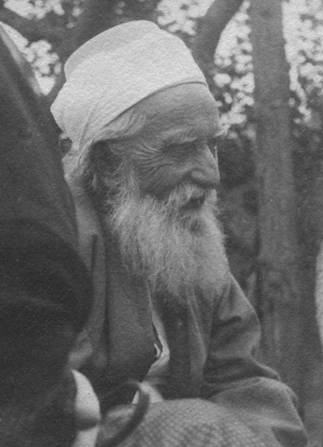
Then the gold had to be taken safely to Ṣan'á, "a difficult task in those lawless days," Ṭúbá Khánum says. A dervish named Muḥammad-'Alí, a devoted disciple "whose joy it was to serve his Master in toilsome and dangerous journeys," was entrusted with the bag of gold and the Pasha's belongings. He set out with minute instructions for finding the lady and enough money for the long journey.
In five months he returned to 'Akká. He had reached Ṣan'á and, though "encompassed with difficulties and risk," he had escaped the cruelty and greed of the husband, which the Pasha had feared, and delivered the gold and her father's belongings into the daughter's own hands. He brought back a receipt from her, signed and witnessed by the Válí of Ṣan'á.
Ṭúbá Khánum ends the account with these words: "It would be impossible to write even a small part of the many compassionate acts of love and charity wrought by the Master."
This is a retelling. For the fuller account, see The Chosen Highway by Lady Blomfield.
Record yourself reading this story
Recording stays on this device only. Nothing is uploaded.
Related stories
The Passing of Bahá'u'lláh at Bahjí
Ṭúbá Khánum, a granddaughter of Bahá'u'lláh, recalls His last illness at Bahjí in 1892, His final words to the believers and the family, and the nine days of mourning the Master arranged after His passing.
A Friend Lost at Smyrna
On the voyage into exile at ‘Akká, Jinab-i-Munib fell gravely ill. The Master and Mirza Musa carried him to a hospital at Smyrna, but when the Master returned with fruit for him, he had died.
The Master's Care for Na'um
In ‘Akká, where there was no hospital, ‘Abdu’l-Bahá quietly paid a doctor to treat the poor. When a crippled woman named Na'um caught measles and was shunned, He gave her a room, His own bedding and every care.
The Teacher Promised a Long Life
Hájí Muhammad-Tahir of Yazd begged Bahá’u’lláh for martyrdom and was told he would live long to teach the Cause. He served for decades as a teacher, historian and protector of the families of Yazd’s martyrs.