Books on a Shelf in Tokyo
Star of the West Editors, Star of the West, (1916), Bahai News Service
When in Bahá'í history
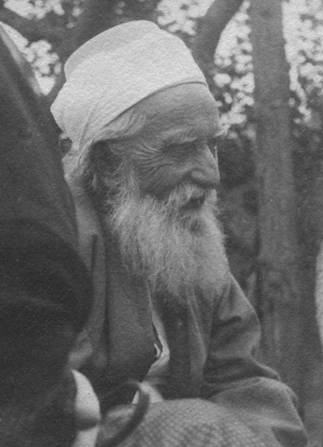
How this story reached us
- 1.Star of the West, vol. 7, no. 5, "Nur 1, 72 (June 5, 1916)", pp. 35, 39-40, "The Glad Tidings in Japan": the Tablet of 4 August 1914 and Agnes Alexander's letter of 10 March 1916 (https://bahai.works/Star_of_the_West/Volume_7/Issue_5/Text)
- 2.Tablets of the Divine Plan, Tablet to the Bahá'ís of the United States and Canada revealed 11 April 1916 (gut/19296.txt lines 539-605)
- 3.Messages to the Bahá'í World 1950-1957, cable of 27 March 1957 (gut/19280.txt lines 7861-7870)
A retelling based on a letter of Agnes Alexander printed in Star of the West. Words in quotation marks are quoted from the printed sources.
"Our weekly Friday Bahai meeting has just closed," Agnes Alexander wrote from Tokyo on 10 March 1916. "Every week new souls come and hear the Message."
One of the newcomers that day told her he had heard of it once before, from a journalist lady who had spoken at the Y.M.C.A. It had been Martha Root, and Agnes read to him from a letter of hers that had arrived that same week. "So we never know when the seed will spring up," she wrote.
Japan had not been her plan. When the war broke out at the beginning of August 1914 she was in Switzerland. She had left her home in Honolulu the previous October and had been, in her own words, "a wanderer ever since, guided alone by Him," and she hoped to visit the Holy Land. On the twenty-first of August a Tablet from 'Abdu'l-Bahá reached her in Geneva. "It is now more advisable for thee to depart directly to Japan," He wrote, "and while there be engaged in the diffusion of the fragrances of God." He hoped she might be "like unto a realm-conquering army and a farmer," and added: "Still thou art perfectly free." On receiving it she set out for Japan.
Her letter of March 1916 describes the work. "I do not seek the people out," she wrote, "but they continually come to me." Four university students who could not come on Friday afternoons had asked to come on Saturday, their only free afternoon. Because she was to be in Yokohama that Saturday for an Esperanto meeting, they came the night before instead. "Such earnest, nice young men, and so eager to learn the truth."
She had lent one of them 'Abdu'l-Bahá's Talks in Paris. He returned it with a note that copied out a line from it, "Strive that your actions day by day may be beautiful prayers," and added: "I was astonished at this, and very much delighted."
Some books had been sent to her to be placed in libraries. Fukuta San, whom she calls "the first Japanese Bahai in Japan," took two of them to a library near his home. The librarian was interested and thanked him warmly, but suggested a larger library where they would find more English readers, and they were placed there. The night before she wrote, her friend Mr. Eroshenko told her that a Japanese man had come to him with one of those books. He had found it in the library and was deeply interested.
Mr. Eroshenko was, in her words, "a blind Russian boy." She was reading Some Answered Questions to him, and he was very enthusiastic about it. He said it ought to be translated into Russian, as it was just what the Russian people needed, and above all into Esperanto. "Who is there to do this work?" she asked her readers. "Surely now is the time."
She also copied out a letter Fukuta San had written in reply to a Bahá'í in India. "The meeting has, for nearly a year and a half, been held on Friday," he wrote, "and I am now one of those who are enjoying the life, as you are, in the shelter of the bounty of BAHA'O'LLAH." He described his country as gradually awaking from its sleep: "as the spring rain comes softly and noiselessly, but its message is so great that all the trees and grasses become awakened from their wintery sleeping and restore their freshness, so there have come here the messengers sent by him to awake us."
The letter ended with her plans for the afternoon. She was going to Yokohama to speak at a public Esperanto meeting, where she would read some of 'Abdu'l-Bahá's words on Esperanto that she had translated with Mr. Eroshenko's help, and he would speak on "Universal Love" from Paris Talks. "Of course, I shall be the only lady and perhaps foreigner," she wrote, "but I go for his sake."
A month later, on 11 April 1916, 'Abdu'l-Bahá revealed in His room at the house in Bahjí a Tablet to the Bahá'ís of the United States and Canada, one of the Tablets of the Divine Plan. In it He named her: "Consider ye, that Miss Agnes Alexander, the daughter of the Kingdom, the beloved maidservant of the Blessed Perfection, traveled alone to the Hawaiian Islands, to the Island of Honolulu, and now she is gaining spiritual victories in Japan!"
Star of the West printed her letter under the heading "The Glad Tidings in Japan" in its issue of Nur 1, 72 (June 5, 1916). Beside it ran a letter from one of her young men, who wrote that through her he had learned, "for the first time in my life, universal religion," and a line of news: during the year Dr. and Mrs. Augur, of Hawaii, had "gone to Japan to spread the glad tidings."
In March 1957 Shoghi Effendi cabled the Bahá'í world: "Agnes Alexander, distinguished pioneer of the Faith, elevated to rank of Hand of Cause."
This is a retelling. For the fuller account, see Agnes Alexander's letter of 10 March 1916 in Star of the West, vol. 7, no. 5.
Cite this story
Editors, S. O. T. W.. (1916). *Star of the West*. Bahai News Service.
Record yourself reading this story
Recording stays on this device only. Nothing is uploaded.
Related stories
Corinne True Is Asked to Speak
Before leaving for Minneapolis, ‘Abdu’l-Bahá asked Corinne True to speak about the Faith in public; when she protested that she had no training, He told her to turn her heart wholly toward Him.
The Special Work
A woman asked ‘Abdu’l-Bahá for a special work. He entrusted to her the orphaned son of her worst enemy, and she wept that she now knew what the Bahá’í Cause means.
Heralds of His Name
O phoenix of that immortal flame kindled in the sacred Tree!
The Collective Center of the Kingdom
TO THE ASSEMBLIES AND MEETINGS OF THE BELIEVERS OF GOD AND THE MAID-SERVANTS OF THE MERCIFUL IN THE UNITED STATES AND CANADA: Upon them be Bahá’u’lláh El-Abhá!