Some of the Experiences of His Forty Years’ Imprisonment
'Abdu'l-Bahá, 'Abdu'l-Bahá in London, (1912) · Read original
When in Bahá'í history
London (today: London, UK)
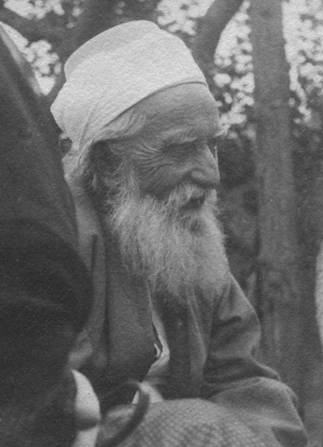
In an apartment in Cadogan Gardens sits a spiritually illumined Oriental, whose recent advent in London marks the latest junction of the East and West.
The teaching of ‘Abdu’l-Bahá has already brought about the commingling of thousands of Englishmen and Englishwomen with Orientals from every quarter of the East. Upon the basis of mutual help and friendship and the worship of God, regardless of creed and denomination, they have joined hands with an earnestness and brotherly love contrary to the theories of certain cynical poets and philosophers.
Most of ‘Abdu’l-Bahá’s life has been spent in an Eastern prison, which he gladly endured rather than abjure his faith, one of the tenets of which is the absolute equality of souls regardless of physical differences, such as sex and colour. He recognizes no class distinctions except those conferred by service and the spirit of brotherly love. For this and other like doctrines he was held prisoner for forty years in the fortress city of Akká, in Palestine. When I requested to talk with him, I was told to come early, and called, according, at nine o’clock, for an interview. It was already mid-day to ‘Abdu’l-Bahá who rises at four, and who had seen eighteen people before his breakfast at half-past six.
Representatives of many languages and nationalities awaited him in the drawing room.
We sat in a circle facing ‘Abdu’l-Bahá who inquired if there were any questions we would like to ask. I said my editor had sent me to ascertain something of his prison life, and ‘Abdu’l-Bahá at once related in a simple impersonal way one of the most remarkable stories conceivable.
“At nine years of age, I accompanied my father, Bahá’u’lláh, in his journey of exile to Baghdád, seventy of his disciples going with us. This decree of exile, after persistent persecution, was intended to effectively stamp out of Persia what the authorities considered a dangerous religion. Bahá’u’lláh, with his family and followers, was banished, and travelled from one place to another. When I was about twenty-five years old, we were moved from Constantinople to Adrianople, and from there went with a guard of soldiers to the fortressed city of Akká, where we were imprisoned and closely guarded.”
Source: 'Abdu'l-Bahá, 'Abdu'l-Bahá in London (1912). Public domain text from Project Gutenberg eBook #19250.
Cite this story
'Abdu'l-Bahá. (1912). *'Abdu'l-Bahá in London*. https://www.gutenberg.org/cache/epub/19250/pg19250-images.html
Record yourself reading this story
Recording stays on this device only. Nothing is uploaded.
Related stories
‘Abdu’l-Ḥamíd’s Committee
“One year before ‘Abdu’l-Ḥamíd was dethroned, he sent an extremely overbearing, treacherous and insulting committee of investigation. The chairman was one of the governor’s staff, Árif Bey, and with him were three army commanders…
The Life of ‘Abdu’l-Bahá
A biography of ‘Abdu’l-Bahá, from His childhood in Tehran and long years of exile and imprisonment to His ministry as Center of the Covenant, His journeys to the West, His writings and His passing in Haifa in 1921.
The Divine Servant, 1844–1908
Jináb-i-Fáḍil's 1924 account of 'Abdu'l-Bahá's life, from His birth on the night of the Báb's declaration through the exiles and His years in 'Akká to His release by the Young Turk revolution of 1908.
From Tabríz to the Most Great Prison
Hounded by his own relatives and friends in Ádhirbáyján for his faith, Hájí Áqá of Tabríz fled with his family to Adrianople, shared the exiles’ imprisonment in ‘Akká, and died there near Bahá’u’lláh.