A Portrait of the Master
bahaistories.com archive · Read original
When in Bahá'í history
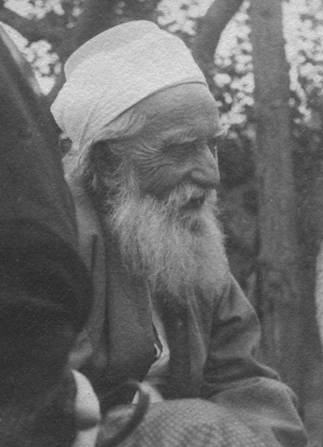
‘Abdu’l-Bahá, in appearance, was of medium height, though to all who met Him, He gave the impression of such majesty that He seemed much taller. His beard was flowing and white; His head covering, whether a turban or tarboosh, was white also. But, meeting Him, none of these details were even noticed. It was only the spirit one felt and the outpouring love. Love filled Him and flowed out from Him to bathe and encompass everyone in His presence.
He was, as we all know, the Mystery of God. His Station is unique. There has been no one like Him in any past religious era, nor will there ever be such in the future. Bahá’u’lláh had bestowed upon Him the assurance of God’s guidance in His explanations of anything in the Teachings that needed clarifying for the believers and, when He was in His early teens, His Father, Bahá’u’lláh, addressed Him and referred to Him as ‘the Master.’
He was the perfect Exemplar of the Bahá’í Teachings: He lived by prayer and wished only to be known as ‘Abdu’l-Bahá, the servant of the servants. He made no mistakes.
Yet, with all this, He needed, as we all need, the constant attitude of prayer to renew and revivify Him, and, urging us ever upward. His constant adjuration was, “Do as I do. Be as I am.”
Source: Reginald Grant Barrow, Mother’s Stories: Stories of ‘Abdu’l-Bahá and Early Believers told by Muriel Ives Barrow Newhall to her son, p. 36. The book gives His age as ten; it is corrected here to “in His early teens”, following Adib Taherzadeh, The Covenant of Bahá’u’lláh, which records that Bahá’u’lláh designated Him “the Master” in Baghdad when He was in His early teens.
Collected from bahaistories.com (Subject: abdul-baha).
Cite this story
Various. *bahaistories.com archive*. https://bahaistories.com/subject/abdul-baha
Record yourself reading this story
Recording stays on this device only. Nothing is uploaded.
Related stories
The Cabinet-Maker of Yazd
A master cabinet-maker, poet and mathematician from Yazd entered Bahá’u’lláh’s presence almost daily in Baghdad, endured exile and hardship in Mosul, and spent his last days praying by the tomb of Bahá’u’lláh, longing for reunion.
How the Master Held His Hands in Prayer
‘Abdu’l-Bahá prayed with His hands held out and slightly bent, palms turned toward His breast, as though already gathering in the blessings He prayed for.
Prayer in Times of Stress
Prayer sustained ‘Abdu’l-Bahá through deep sorrow and grave danger. At times He prayed through an entire night, and He often prayed that His conditions might become more severe so that His strength to meet them might increase.
The Storm at the Unity Feast
At the Unity Feast in West Englewood in June 1912, a sudden storm broke just as the meal was announced. Juliet Thompson watched ‘Abdu’l-Bahá sit at a distant crossroad, His face upturned to the sky, until the clouds raced away.