News of the Dervish in the Mountains
bahaistories.com archive · Read original
When in Bahá'í history
Sulaymáníyyih (today: Sulaymaniyah, Iraq)
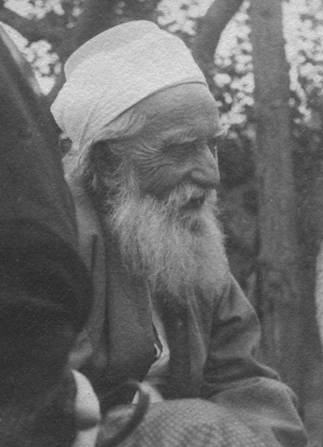
In 1854 Bahá'u'lláh withdrew from Baghdad to the mountains of Kurdistan, where for two years He lived in solitude, calling Himself a dervish. His daughter, Bahíyyih Khánum, recalled how the family at last heard news of Him:
After my father's departure many months passed; he did not return, nor had we any word from him or about him. We were all in great sorrow, and made constant inquiries, hoping to hear some rumour which would enable us to trace him.
There was an old physician at Baghdad who had been called upon to attend the family, and who had become our friend. He sympathised much with us, and undertook on his own account to make inquiries for my father. He at length thought that he had traced him to a certain locality, quite distant from Baghdad, in the mountains; and thereafter was accustomed to ask all persons whom he met from that region for such a man. These inquiries were long without definite result, but at length a certain traveller to whom he had described my father, said that he had heard of a man answering to that description, evidently of high rank, but calling himself a dervish, living in caves in the mountains. He was, he said, reputed to be so wise and wonderful in his speech on religious things that when people heard him they would follow him; whereupon, wishing to be alone, he would change his residence to a cave in some other locality. Further he related this incident:
A boy attending a village school had been flogged and sent out for failure in his writing. While he was weeping outside the schoolroom, this holy man came by and asked the cause of his grief. When the lad had explained his trouble the Dervish said: 'Do not grieve. I will set you another copy, and teach you to write well.' He then took the boy's slate and wrote some words in very beautiful characters. The boy was delighted; and showing his slate in pride at now having a better master than he had had in the school, the people were astonished, Dervishes being commonly illiterate. They then began to follow the Dervish; who, wishing to meditate and pray in solitude, left that place for another.
When we heard these things, we were convinced that this Dervish was in truth our beloved one. But having no means to send him any word, or to hear further of him, we were very sad.
Source: Bahíyyih Khánum's account in Myron H. Phelps, Life and Teachings of Abbas Effendi (1903), pp. 21–22.
Collected from bahaistories.com (Subject: bahaullah-sulaymaniyyih).
Cite this story
Various. *bahaistories.com archive*. https://bahaistories.com/subject/bahaullah-sulaymaniyyih
Record yourself reading this story
Recording stays on this device only. Nothing is uploaded.
Related stories
Farewell to Their Native Country
His nine-year-old son, later surnamed the ‘Most Great Branch’, destined to become the Centre of His Covenant and authorized Interpreter of His teachings, together with His seven-year-old sister …
O Ye Who Burn in the Flames of Bereavement!
O ye who burn in the flames of bereavement! By the Day-star of the World, my bereaved and longing heart is afire with a grief that is beyond my description.
Dearly-Beloved Greatest Holy Leaf
Brethren and fellow-mourners in the Faith of Bahá’u’lláh! A sorrow, reminiscent in its poignancy, of the devastating grief caused by ‘Abdu’l-Bahá’s sudden removal from our midst, has stirred the Bahá’í world to its foundations.
From Gallipoli to Alexandria
At Gallipoli, foreign consuls offered to secure refuge in Western Europe for Bahá’u’lláh and His family, but He would not abandon His followers. Bahíyyih Khánum recalls the hungry, frightened voyage that followed.